

Glass Bottle Manufacturers in the USA and Europe: Choosing the Right Production Partner for Beauty Packaging
Choosing a glass bottle manufacturer for a skincare, haircare or makeup launch is not the same as buying containers. A beauty bottle has to protect a sensitive formula, dispense it precisely, carry the brand’s identity and arrive on time for launch, often in several markets at once. The manufacturer you choose determines all four.
This guide explains what specialised beauty glass bottle manufacturers actually produce, how production differs between the USA and Europe, what each step of a project involves, and which questions separate a reliable production partner from a simple supplier.

Table of Contents
Key takeaways
- In beauty, the bottle and the dispensing system work as one product. Manufacturers that produce glass, droppers and decoration together reduce compatibility risks and development time.
- Tubular glass and moulded glass serve different needs. Knowing which one fits your formula and format narrows the list of suitable manufacturers.
- US and European beauty projects often use different neck standards (GCMI vs. DIN-based), which affects closure compatibility across markets.
- Minimum order quantities and lead times depend mainly on how much is custom: standard references move fast, new tooling and decoration take longer.
- Regulation is tightening on both sides of the Atlantic, so material documentation is now part of choosing a manufacturer.
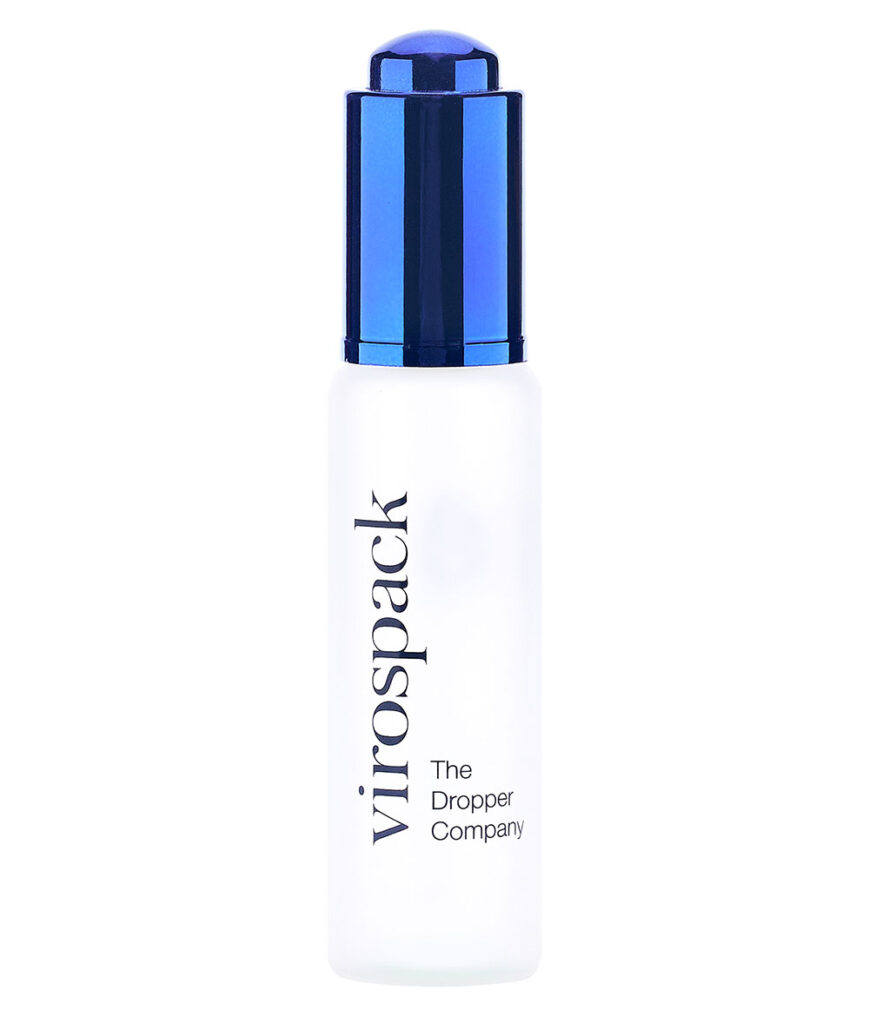
What does a beauty glass bottle manufacturer actually produce?
A finished beauty pack is made of several components, and each one affects how the product performs:
- The glass container: bottle or vial, with a specific capacity, height, diameter, neck finish and glass colour.
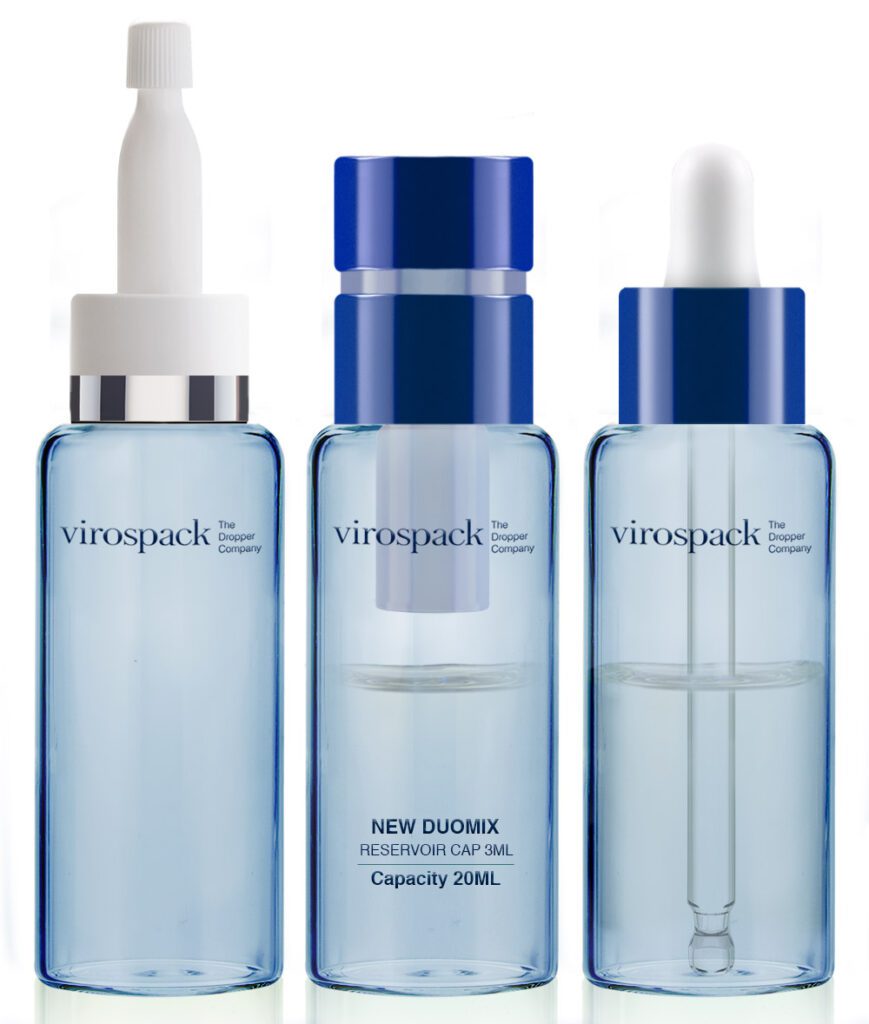
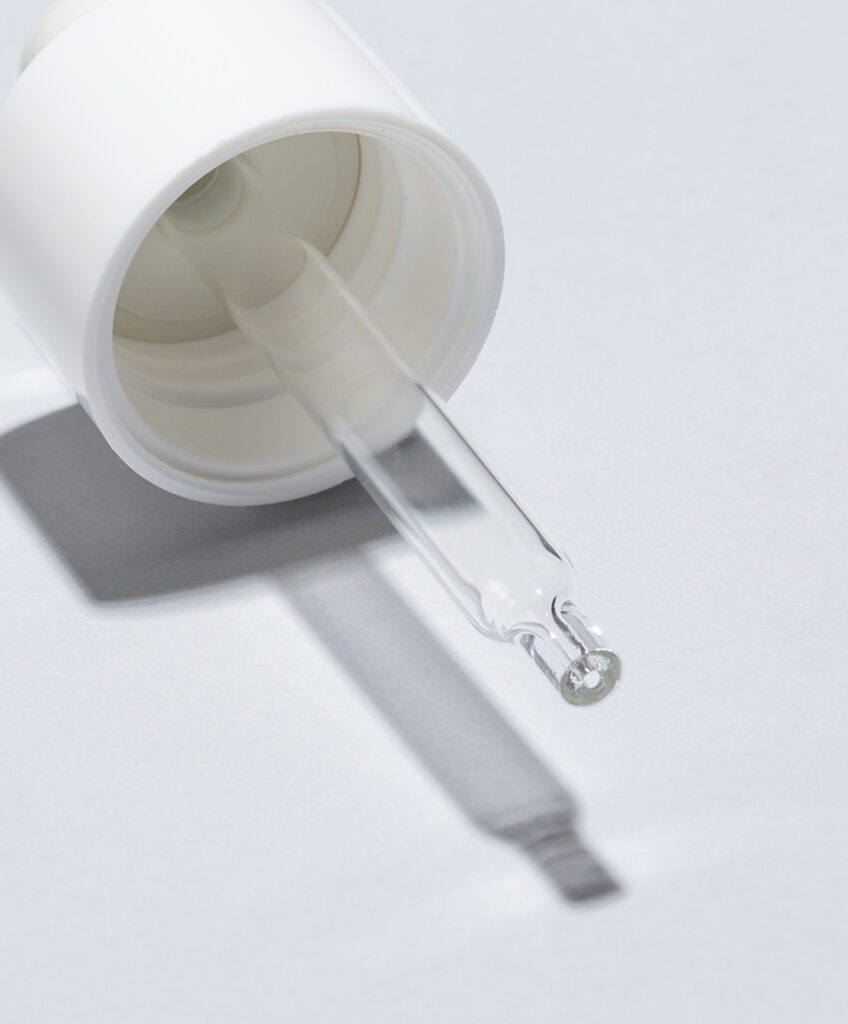
- The dispensing system: a dropper (collar, bulb and pipette), a push-button dropper, a cap or another closure.
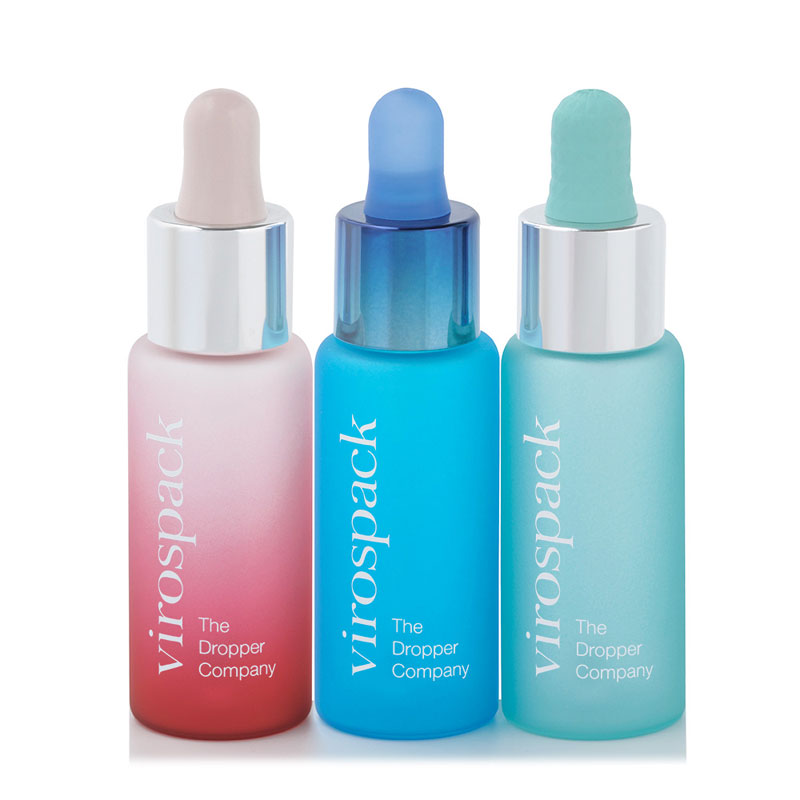
- Decoration: printing, foiling, coatings, metallised or frosted effects applied to glass and components.
- Assembly and inspection: putting the components together and checking them before shipment.
Some beauty packaging manufacturers only produce glass and leave the rest to other suppliers. Others produce the full pack. For beauty brands, the difference is significant: when the bottle comes from one supplier and the dropper from another, issues such as a pipette that does not reach the bottom, a bulb that reacts with the formula or a collar that does not match the decoration usually appear late, when changes are costly.
Tubular glass vs. moulded glass for beauty packaging
The first technical decision is the type of glass container, because it defines which manufacturers can make it.
Tubular glass | Moulded glass | |
How it is made | Converted from precision glass tubing that is cut, formed and finished | Molten glass pressed or blown into a mould |
Weight and walls | Light, thin, uniform walls | Heavier, thicker walls and bases |
Dimensional precision | Very consistent, ideal for small formats | Wider tolerances, more freedom of shape |
Typical beauty uses | Serums, concentrates, ampoule-style treatments, boosters, samples, travel sizes | Hero serums, premium skincare, oils and fragrances where weight signals value |
Flexibility for custom sizes | Height, diameter and neck can be adjusted without a new mould | New shapes usually require new moulds |
Tubular glass bottles are especially useful for brands that need precise small formats or want to adapt dimensions without investing in moulds. Neutral hydrolytic glass, available in transparent or amber, offers good chemical resistance for active formulas.
Choosing the right glass for the formula
Glass is chemically stable and impermeable, which is why it remains the reference material for concentrated skincare. But not all glass behaves the same:
- Transparent glass shows the colour and texture of the formula, but offers little protection from light.
- Amber glass filters part of the light spectrum and is often chosen for formulas with light-sensitive actives such as vitamin C, retinoids or botanical oils.
- Coated or lacquered glass can add opacity or colour when the brand wants protection with a different visual identity.
A good manufacturer will ask about the formula before recommending a glass type, and will propose compatibility tests on the complete pack, not only on the bottle.

Droppers Catalogue
Discover our full range of droppers catalogue
The dispensing system: where precision is decided
For serums, oils, eye treatments and liquid makeup, the dispensing system is what the consumer actually uses every day. Its design affects dosage, hygiene and the perceived quality of the product.
When evaluating droppers, these are the points that matter most:
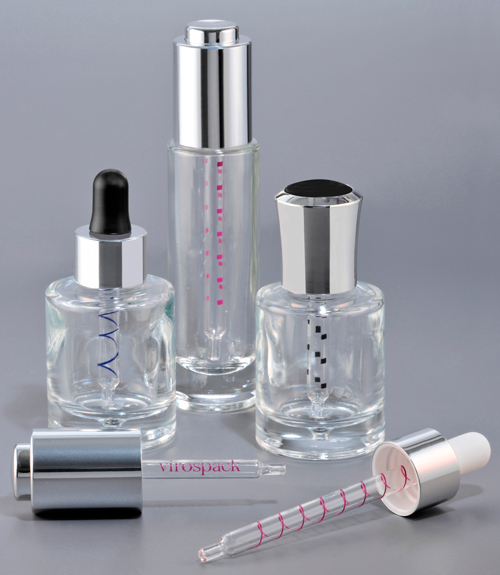
- Pipette: length adapted to the bottle so it reaches the bottom; glass or plastic depending on the formula; tip shape according to the desired drop size.
- Bulb: material chosen for compatibility with the formula. Nitrile, butyl, natural rubber and TPE react differently with oils, alcohols and actives.
- Collar: PP, urea, wood or recycled and bio-based materials, each with its own weight, finish and sustainability profile.
- Dosing gesture: a classic bulb dropper suits most serums, while push-button droppers deliver a more controlled dose with a cleaner gesture.
Estée Lauder Advanced Night Repair is a clear example. Its “little brown bottle” with an apothecary-style dropper has become one of the most recognisable packs in skincare: the dark glass helps protect the formula, and the dropper defines the daily ritual of applying it.
Decoration: how premium is built on glass
Decoration is where many beauty projects gain or lose their premium perception. It also has a direct impact on cost and lead time, so it is worth knowing which techniques a manufacturer handles in-house.
Technique | What it does | Typical use |
Screen printing | Prints logos and text with sharp, durable ink, in one or several colours | Branding on bottles and vials |
Hot stamping | Applies metallic foil (gold, silver, colours) with heat and pressure | Premium details on glass and caps |
Pad printing | Transfers ink onto curved or small surfaces | Collars, caps and small components |
Lacquering / painting | Adds opaque or translucent colour, bright or matte | Brand colours, light protection |
Spray effects | Gradients, pearlescent and special effects | Distinctive, high-impact finishes |
Metallisation | Creates mirror-like metallic surfaces | Collars and caps with a luxury look |
Frosting | Gives glass a satin, translucent finish | Soft-touch, minimalist aesthetics |
When decoration is done by a separate company, each transport and handover adds time and the risk of damage. In-house decoration also makes it easier to validate colours and effects on the real bottle before production.
Glass bottle manufacturers in the USA and Europe: what changes for beauty brands
For beauty packaging, the main differences between producing in the USA and in Europe are not only geographical. They affect compatibility, compliance and planning.
Factor | USA | Europe |
Specialised beauty glass offer | More limited; many brands rely on stock bottles and importers | Long tradition of specialised manufacturers for skincare, makeup and fragrance |
Usual neck finishes | GCMI standards (e.g. 18/415, 20/410) | DIN-based standards (e.g. Europa 4, Europa 5), with many manufacturers also offering GCMI |
Packaging regulation | State-level extended producer responsibility (EPR) laws | EU Packaging and Packaging Waste Regulation (PPWR), applicable from August 2026 |
Logistics for US launches | Domestic transit and replenishment | Transatlantic shipping; requires planning with the launch calendar |
Neck finishes deserve special attention. A dropper or cap designed for a GCMI neck will not fit a DIN-based neck, and vice versa. Brands selling in both markets save tooling, inventory and validation time when their manufacturer works with both systems.
Compliance is becoming a selection criterion. In Europe, PPWR introduces stricter requirements on recyclability, packaging minimisation and documentation. In the US, several states have adopted EPR laws that make brands responsible for the packaging they place on the market. In both cases, brands need clear information from their manufacturer on materials and recyclability.

From brief to delivery: how a beauty packaging project works
Understanding the process helps brands plan realistic timelines and know what to expect from a manufacturer at each stage.
- Brief: formula type, capacity, target markets, positioning, budget and launch date.
- Technical recommendation: glass type, neck finish, dispensing system and materials compatible with the formula.
- Design and development: adaptation of standard references or design of custom components.
- Samples and prototypes: physical samples to validate ergonomics, dosage and appearance.
- Compatibility testing: the brand tests the formula in the complete pack.
- Tooling: only needed for custom shapes or components.
- Decoration validation: colours, finishes and artwork approved on the real component.
- Production: manufacturing of glass, components and decoration, with quality controls at each stage.
- Assembly and inspection: components are assembled and checked before shipment.
- Delivery: shipping planned according to the launch calendar and destination market.
Minimum order quantities and lead times
MOQs and lead times are among the first questions brands ask, and the honest answer is that they depend on how much of the pack is custom:
- Standard references with standard finishes have the lowest MOQs and the shortest lead times.
- Standard references with custom decoration add the time needed to validate artwork and decorate.
- Fully custom developments involve tooling, prototypes and validation, and require larger runs and longer planning.
For brands testing a market, launching a limited edition or starting small, ready-to-go ranges are a practical option. Virospack’s fast-track standard packaging range was created precisely for this: selected tubular glass references with low MOQs and stock available for fast delivery.

Sustainability: what to ask a manufacturer
Sustainability claims in beauty packaging are increasingly scrutinised, so it is worth asking for evidence rather than statements:
- Which recycled (PCR) or bio-based materials are available for collars, caps and other components?
- Can the pack be designed with fewer materials or easier separation for recycling?
- Are water-based paints or lower-impact decoration processes used?
- Does the manufacturer hold independent sustainability ratings? Virospack, for example, has held an EcoVadis Gold Medal for four consecutive years.
Checklist: 10 questions to ask any glass bottle manufacturer
- Which components do you produce in-house: glass, droppers, closures, decoration, assembly?
- Do you work with tubular glass, moulded glass or both?
- Which glass types and colours are available for my formula?
- Which neck finishes do you produce: GCMI, DIN-based or both?
- Which bulb and pipette materials do you recommend for my formula, and why?
- Which decoration techniques do you apply in-house?
- What are your MOQs and lead times for standard and custom projects?
- How do you support compatibility testing?
- Which quality controls do you apply during production and assembly?
- What documentation can you provide for PPWR and US packaging regulations?

Warning signs when evaluating a manufacturer
- They cannot say where each component is produced.
- They recommend a solution before asking about the formula.
- They offer decoration but outsource it without saying so.
- They cannot provide samples of the complete pack.
- They give lead times without distinguishing between standard and custom work.
Why beauty brands work with Virospack
For almost 70 years, Virospack has specialised in packaging for beauty brands, with a focus on droppers and glass bottles. Its facilities in Spain bring together moulded and tubular glass production, rubber and pipette production, plastic and urea injection, decoration and automated assembly, which allows complete packs to be developed and controlled under one roof.
That integration translates into production capacity at every stage: more than 130 million pipettes and up to 150 million rubber components per year, over 50 million units of screen printing and hot stamping, and two automatic metallisation lines with a combined capacity of 40 million pieces per year.
If you are comparing glass bottle manufacturers for your next skincare, haircare or makeup launch, contact our team to discuss your project.
Frequently asked questions
What is the difference between a glass bottle manufacturer and a supplier?
A manufacturer produces the packaging in its own facilities, while a supplier or distributor may sell bottles produced by third parties. Working directly with a manufacturer gives more control over specifications, quality and timelines. You can read more in our guide on what to look for in a glass bottle supplier.
Are European glass bottle manufacturers a good option for US beauty brands?
Yes, especially for premium skincare and makeup. Europe has a long tradition of specialised beauty packaging. The key is to confirm that the manufacturer produces GCMI neck finishes if US closures will be used, and to plan production and shipping with the launch calendar.
What is the minimum order quantity for cosmetic glass bottles?
It depends on the level of customisation. Standard references can be ordered in smaller quantities, while custom shapes, tooling and decoration require larger runs. Ready-to-go standard ranges offer the lowest MOQs.
How long does it take to produce custom beauty packaging?
Standard references can be delivered quickly, especially when stock is available. Custom projects take longer because they include design, prototypes, compatibility tests, tooling and decoration validation. Involving the manufacturer early is the best way to shorten the process.
Which glass is best for serums and active skincare?
Neutral glass offers good chemical resistance for most formulas. For light-sensitive actives, amber glass or opaque coatings add protection. The final choice should always be validated with compatibility tests on the complete pack.
Can a dropper be customised to my brand?
Yes. Collars, bulbs and pipettes can be adapted in material, colour, finish and size, and decorated with techniques such as hot stamping or metallisation. Pipette length and tip are also adjusted to the bottle and the desired dose.
What is the difference between GCMI and DIN neck finishes?
They are two different standards for bottle necks and closures. GCMI finishes are common in the US, while DIN-based finishes such as Europa 4 or Europa 5 are common in Europe. Closures are not interchangeable between the two systems.