

What Is Amber Glass: Why It’s Essential for Skincare and Cosmetic Packaging
Amber glass is not simply dark glass. In skincare and cosmetic packaging, it is a protective material used when the formula itself requires a higher level of stability.
Many cosmetic formulas contain ingredients that are sensitive to light, oxygen or temperature changes. When these formulas are exposed to the wrong conditions, their performance can degrade before the product is finished by the consumer.
That is why understanding what is amber glass matters. It is not a question of colour, aesthetics or apothecary-style design. It is a question of preservation.
For brands working with active skincare, facial oils, serums or treatment products, amber glass can become part of the formula protection strategy, helping maintain product integrity from production to final use.

Table of Contents
What Is Amber Glass?
Amber glass is a type of glass engineered to reduce the transmission of specific wavelengths of light, particularly in the UV and blue spectrum.
This is achieved by modifying the composition of the glass during manufacturing, resulting in a material that absorbs and filters incoming radiation rather than allowing it to pass through.
Unlike clear glass, which offers full transparency, amber glass introduces a controlled opacity that limits the energy reaching the formula.
This distinction is critical.
Because in cosmetic formulations, light is not neutral. It is an active factor that can alter the product over time.
How Amber Glass Protects Cosmetic Formulas from Light
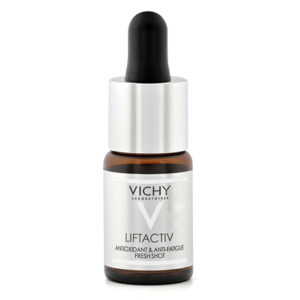
Light exposure is one of the most underestimated factors in product degradation.
When light penetrates the container, it can trigger reactions that affect the formula at a molecular level.
These reactions do not always produce immediate visible changes, but they progressively alter the product.
This can lead to:
- loss of efficacy
- oxidation of oils
- instability in emulsions
- changes in colour and texture
Amber glass reduces the intensity of these reactions by filtering the most reactive wavelengths.
This becomes especially relevant in formulations based on highly sensitive actives, such as vitamin C.
In products like Vichy Liftactiv Vitamin C Serum, the stability of the active ingredient is critical to performance.
Exposure to light can accelerate oxidation, reducing effectiveness over time.
By limiting that exposure, amber glass helps preserve the integrity of the formula throughout its lifecycle.
It does not eliminate degradation completely, but it slows it down enough to maintain the intended performance from first use to last.
Why Light Sensitivity Matters in Skincare Formulations
The more advanced the formulation, the more sensitive it tends to be.
Modern skincare products are built around active ingredients that are effective precisely because they are reactive.
Antioxidants, botanical extracts and lipid-based compounds can deliver visible results, but they are also more vulnerable to environmental conditions.
Light is one of the most critical of these factors.
Even moderate exposure can initiate degradation processes that affect the stability of the formula. These changes are often progressive and not immediately visible, but they directly impact how the product performs over time.
This becomes particularly relevant in formulations that combine multiple active phases or require controlled activation.
In products like L’Erbolario Prima & Poi Anti-Age Serum, where the formulation is designed to deliver active ingredients in a specific sequence or state, maintaining stability is essential to ensure that the product performs as intended.
In this type of system, uncontrolled exposure to light can alter the balance between components, reducing effectiveness before the product is fully used.
This is why packaging cannot be neutral.
Amber glass does not enhance the formulation itself, but it helps maintain the conditions required for it to function correctly across its entire lifecycle.

When to Use Amber Glass in Cosmetic Packaging

Amber glass should be used when the formula requires protection, not when the design demands it.
It becomes particularly relevant in products where:
- active ingredients are sensitive to light
- oxidation can affect performance
- stability over time is critical
- the product is used over an extended period
In these cases, amber glass is not an upgrade. It is a requirement.
For more stable formulations, using amber glass may not add value and can limit design flexibility.
The decision must always be based on formulation behaviour.
Droppers Catalogue
Discover our full range of droppers catalogue
UV-Protective Glass vs Clear Glass: What’s the Difference in Performance
The difference between amber and clear glass is not aesthetic. It is functional.
Clear glass maximizes visibility. It allows the user to see the product fully, which can be desirable from a design perspective.
However, it also allows full light transmission. The formula is continuously exposed to environmental radiation.
Amber glass reduces that exposure.
This creates a fundamental trade-off:
- transparency vs protection
In high-performance skincare, protection tends to take precedence over visibility.
Because what is at stake is not how the product looks, but how it performs over time.


Does Amber Glass Affect Product Perception?

Although its primary role is functional, amber glass also shapes perception.
It is often associated with:
- technical formulations
- high-concentration actives
- treatment-oriented products
This association is not accidental.
The visual language of amber glass communicates that the product requires protection — and therefore that it contains something worth protecting.
At the same time, it limits visual exposure of the formula.
This forces brands to build value through function and positioning rather than transparency.
How Amber Glass Works with Dropper Systems

Amber glass is frequently combined with dispensing systems designed to control how the product is used and preserved.
This is not accidental.
Both the material and the dispensing system respond to the same requirement: maintaining stability while ensuring controlled application.
Traditional pipette droppers allow progressive dosing, giving the user flexibility in how much product is applied.
However, they also introduce variability, as the amount dispensed depends on how the pipette is used.
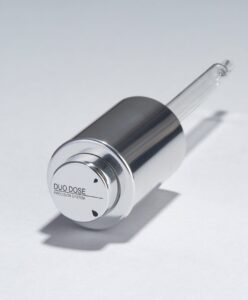
More advanced systems, such as Push Button Droppers , reduce this variability by regulating the dosing cycle internally. This creates a more consistent and repeatable application, particularly important in formulas where precision is critical.
Other innovations, such as magnetic droppers, focus on system integrity. By improving closure and alignment, they ensure a more secure seal between uses, reducing the risk of leakage and limiting unnecessary exposure to air and light.
In this context:
- the dispensing system controls how much product is applied
- the amber glass controls how the product is preserved between uses
Together, they form a system that manages both application and stability.
However, not all formulations are suited to dropper-based application.
For higher-viscosity products or formulas that require direct surface contact, solutions such as caps with integrated spatula holders offer a more controlled and hygienic way to apply the product.
In contrast, formats like roll-on systems respond to a completely different logic.
Instead of dosing, they focus on continuous, even distribution across the skin, making them more suitable for products where application coverage matters more than precision.
At this level, the decision is not about choosing a format in isolation.
It is about selecting the right combination of material and dispensing system based on how the formula behaves and how the product is meant to be used.
Other innovations, such as magnetic droppers, focus on system integrity. By improving closure and alignment, they ensure a more secure seal between uses, reducing the risk of leakage and limiting unnecessary exposure to air and light.
What Brands Should Consider Before Choosing Amber Glass
Choosing amber glass is not a design decision. It is a product decision.
Brands must evaluate:
- how sensitive the formula is to light
- how performance evolves over time
- how long the product will be used
- whether protection is required to maintain efficacy
Amber glass adds protection, but also introduces limitations in design and transparency.
Using it correctly means understanding both sides.
FAQs About Amber Glass in Cosmetic Packaging
What is amber glass used for in cosmetics?
It is used to protect light-sensitive formulations and maintain their stability over time.
Does amber glass completely block light?
No. It reduces light exposure significantly, but does not eliminate it entirely.
Is amber glass always necessary?
No. It is only required when the formula is sensitive to light or prone to degradation.
Why is amber glass common in serums and oils?
Because these formulations often contain active ingredients that are vulnerable to light and oxidation.
Does amber glass improve product performance?
It does not improve the formula itself, but it helps preserve its intended performance throughout its use.