

How Much UV Does Glass Block: UV Protection in Cosmetic Packaging
Glass is often associated with product protection, but not all glass blocks UV light in the same way.
In cosmetic packaging, UV exposure can directly affect the stability of formulas containing active ingredients, oils and antioxidants. This means the level of UV protection provided by the bottle becomes an important part of the packaging decision.
The problem is that UV protection is frequently oversimplified.
Glass does not automatically block all UV radiation, and the amount filtered depends on multiple factors, including glass colour, thickness and construction.
Understanding these differences is essential when developing packaging for sensitive skincare and cosmetic formulations.

Table of Contents
Does Glass Naturally Block UV Light?
Glass naturally filters part of the ultraviolet spectrum, but not completely.
Most standard cosmetic glass reduces a portion of UV radiation simply because light transmission changes as it passes through the material. However, the level of protection varies significantly depending on the type of glass used.
This means that while glass offers more protection than many transparent plastics, it should not be assumed to provide total UV blocking by default.
In cosmetic packaging, the question is not whether glass blocks UV light, but how much UV transmission remains after filtering.
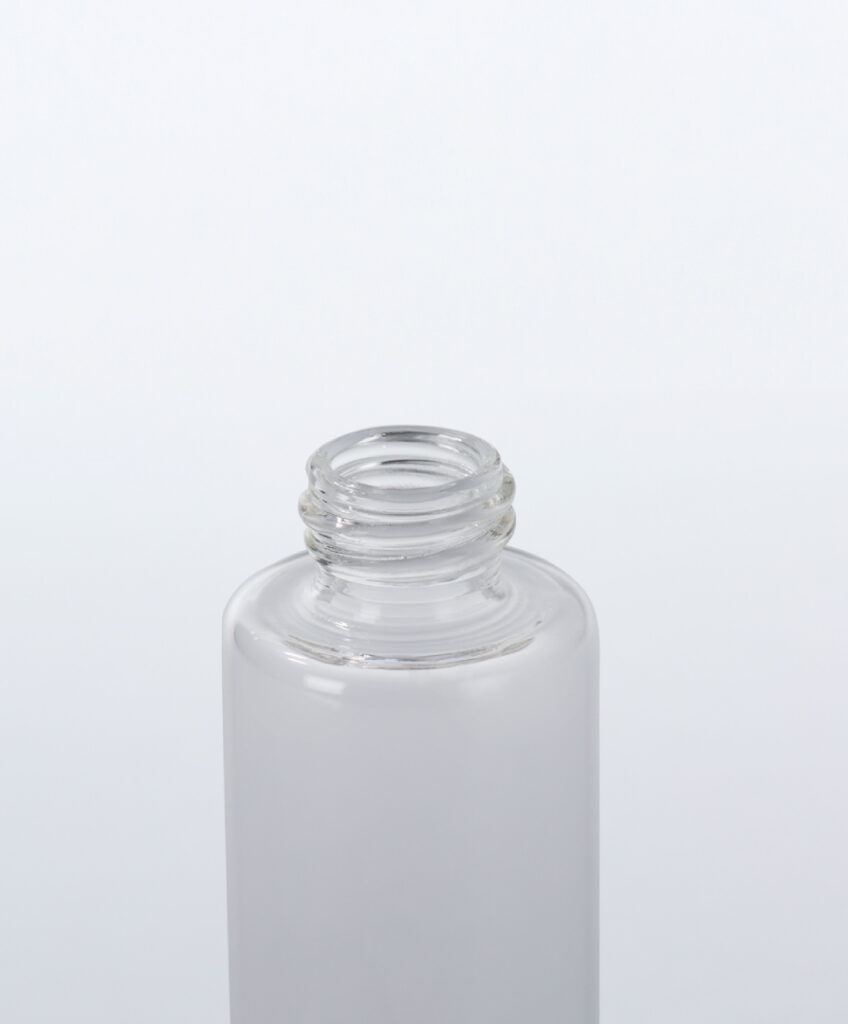
How Much UV Does Clear Glass Actually Block?
Clear glass provides only limited UV protection.
It can reduce part of the UV spectrum, particularly shorter wavelengths, but a significant amount of UV radiation can still pass through the bottle and reach the formula.
This becomes more relevant in products exposed to:
- natural daylight
- retail lighting
- repeated daily use near windows or illuminated environments
For stable formulations, this level of exposure may not create major issues.
For active skincare products, however, prolonged UV exposure can gradually affect:
- ingredient stability
- oxidation rates
- colour consistency
- product performance over time
This is why clear glass is not always the ideal solution for formulas sensitive to light degradation.
Why UV Exposure Matters in Cosmetic Formulas
Many cosmetic formulations contain ingredients that are vulnerable to UV exposure.
This includes:
- antioxidants
- botanical extracts
- vitamins
- essential oils
- active skincare compounds
When exposed to UV radiation, these ingredients may oxidize or degrade progressively.
The effects are not always immediately visible, but they can influence how the product performs throughout its lifecycle.
This is particularly important in concentrated serums and oil-based formulations, where stability is closely linked to efficacy.
In these cases, UV protection becomes part of the formulation strategy itself.
How Amber Glass Improves UV Protection
Amber glass is commonly used when formulations require greater protection from light exposure.
The darker pigmentation helps reduce UV transmission more effectively than clear glass, limiting the amount of radiation that reaches the product inside.
A useful technical distinction is that standard clear soda-lime glass tends to block most shorter UVB wavelengths, but it can still allow part of the UVA range to pass through. UVA is less energetic than UVB, but it is still relevant for light-sensitive cosmetic formulas because exposure accumulates over time.
This is especially relevant for:
- active serums
- facial oils
- essential oil formulations
- concentrated skincare treatments
Amber glass does not completely eliminate UV exposure, but it provides a stronger filtering effect than clear glass, especially when the goal is to reduce cumulative light exposure during storage, retail display and repeated use.


Droppers Catalogue
Discover our full range of droppers catalogue
UV Protection vs Full Light Blocking
Reducing UV exposure is not the same as completely blocking light.
This distinction is important because even glass that filters a high percentage of shorter UV wavelengths may still transmit part of the longer UVA range. For example, ordinary smooth glass has been measured transmitting substantial UVA in some contexts, while laminated or specially treated glass can perform very differently.
In cosmetic packaging, the objective is usually balance.
Brands often need to combine:
- product protection
- visual presentation
- user perception
- formula stability
This means UV filtering should be understood as controlled reduction, not absolute isolation.
How Glass Thickness and Color Affect UV Filtering
UV protection is influenced by colour, thickness and glass composition.
Darker glass generally reduces light transmission more effectively than clear glass. Thickness can also contribute: a thicker wall or heavier base increases the path light must travel through the material, which can reduce transmission. However, colour and glass composition usually have a stronger influence than thickness alone.
This is why amber glass is commonly preferred for light-sensitive formulas, while clear glass is better suited when visibility is more important than protection.
The type of bottle construction also matters:
- Moulded glass bottles can offer thicker bases and stronger physical presence
- Tubular Glass bottles usually support cleaner, lighter and more uniform structures
At this level, UV protection is not only about asking “how much UV does glass block?” but about choosing the right balance between formula protection, visibility and brand positioning.


FAQs About UV Protection and Glass Packaging
Does glass completely block UV light?
No. Most glass reduces UV transmission, but does not completely eliminate it.
Does amber glass block more UV than clear glass?
Yes. Amber glass filters UV radiation more effectively than clear glass, making it more suitable for sensitive formulations.
Why is UV protection important in cosmetic packaging?
Because UV exposure can degrade active ingredients, oils and antioxidants over time, affecting product stability and performance.
Does thicker glass improve UV protection?
Thicker structures can reduce light transmission to some extent, but colour and pigmentation usually have a greater influence on UV filtering performance.
Is clear glass suitable for active skincare products?
It can be, depending on the stability of the formula. However, highly sensitive formulations often benefit from stronger UV protection systems such as amber glass packaging.