

How Many Drops Are in 1 oz of Essential Oil: A Complete Guide to Dropper Accuracy
The idea that a bottle of essential oil contains a fixed number of drops is technically inaccurate.
Although many sources provide standard estimates, the real number of drops in 1 oz of essential oil depends on multiple factors, including the viscosity of the formula, the dispensing system and the geometry of the dropper itself.
This is why drop accuracy matters.
In essential oil packaging, the dispensing system does not only control application. It influences dosage consistency, product perception and even how efficiently the formula is used over time.
Table of Contents
How Many Drops Are Typically in 1 oz of Essential Oil?
In most cases, 1 oz (approximately 30 ml) of essential oil contains between:
- 500 and 900 drops
However, this range is only an approximation.
The actual number depends on:
- the viscosity of the oil
- the dropper configuration
- the size of the pipette opening
- how pressure is applied during dispensing
This is why two bottles with the same volume may produce noticeably different drop counts.
Why the Number of Drops Is Never Exactly the Same
A drop is not a standardized unit.
Its size changes depending on how the liquid behaves during dispensing.
More fluid oils tend to produce smaller drops, increasing the total number of drops per bottle. Thicker oils generally create larger drops, reducing the total count.
Other variables also influence this behaviour:
- surface tension
- temperature
- dispensing angle
- airflow inside the pipette
Even small changes in drop formation can significantly affect dosing consistency over repeated use.
How Dropper Design Affects Drop Accuracy
The dispensing system plays a major role in how drops are formed.
Different droppers generate different dispensing behaviours depending on:
- pipette diameter
- bulb pressure
- liquid flow resistance
- neck compatibility
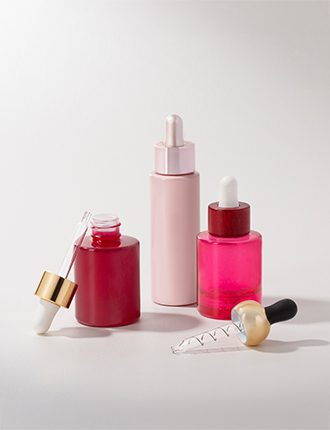
Traditional pipette droppers rely heavily on user interaction. The amount dispensed can vary depending on how the bulb is pressed and released.
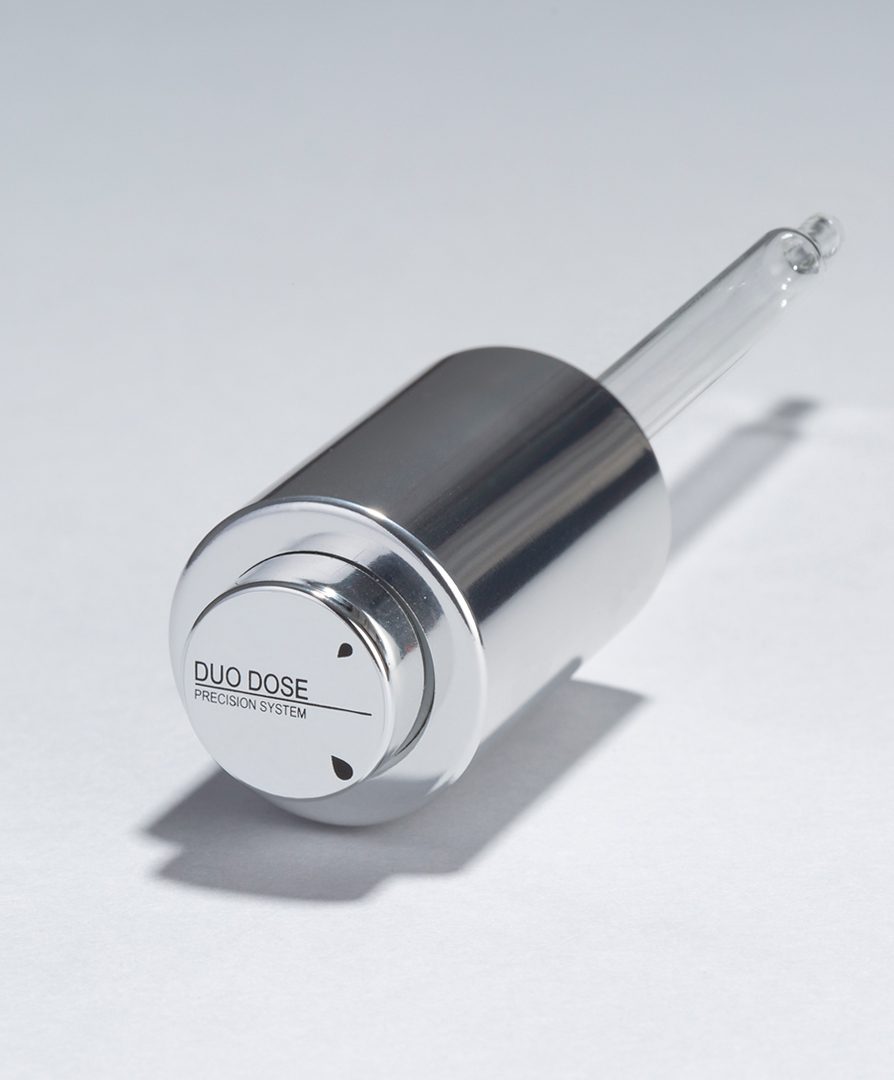
More advanced systems, such as Push-Button Droppers, reduce this variability by regulating the dispensing cycle internally. This allows a more controlled and repeatable release, particularly useful in concentrated formulations where precision matters.
At this level, drop accuracy is not only determined by the formula. It is also determined by the engineering of the dispensing system.
Why Essential Oils Require Controlled Dispensing
Essential oils are highly concentrated.
Even small variations in dosage can change how the product is used, perceived and consumed over time.
Controlled dispensing helps:
- reduce product waste
- improve consistency between applications
- avoid overuse
- support a more precise user experience
This is particularly important in formulations where the oil is applied directly to the skin or mixed with other ingredients.
In these cases, the dropper becomes part of the formulation experience itself.
Droppers Catalogue
Discover our full range of droppers catalogue
Standard Droppers vs Push Button Droppers
Not all dispensing systems provide the same level of control.
Standard droppers offer flexibility and progressive dosing. Users can adapt the amount dispensed depending on pressure and usage style.
This creates a more manual and personalized interaction.
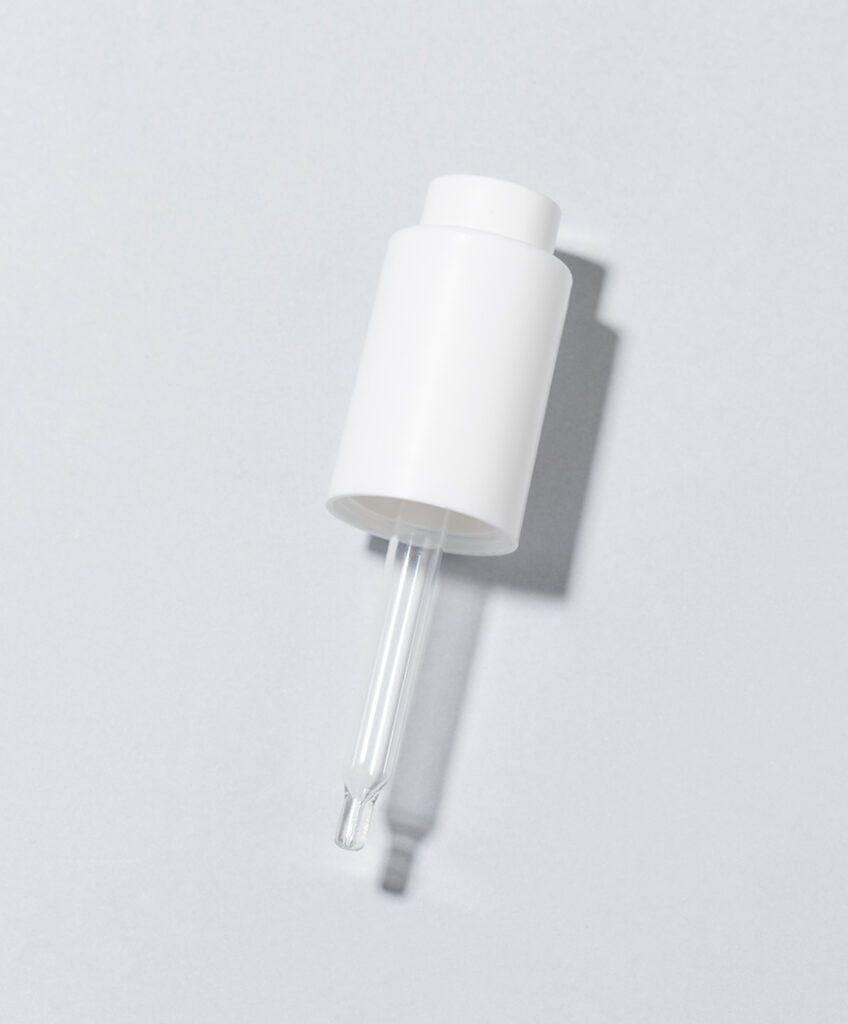
Push button droppers, on the other hand, are designed to reduce variability. By controlling the dispensing cycle more precisely, they support a more repeatable and measured application.
The difference is not about which system is universally better.
It depends on:
- the viscosity of the formula
- the required level of precision
- the intended user experience
At this level, the dispensing system influences both technical performance and product perception.
How Viscosity Changes Drop Size
Viscosity directly affects how drops are formed.
Lighter oils tend to flow more easily through the pipette, producing:
- smaller drops
- faster release
- higher total drop counts
Thicker oils behave differently.
They move more slowly, create larger droplets and often require greater pressure to dispense consistently.
This means that two essential oils with the same bottle size may produce very different dispensing behaviours.
Understanding viscosity is essential when selecting both the bottle and the dispensing system.
Why Packaging Consistency Matters in Essential Oil Products
Consistency affects how users perceive quality.
If the dispensing experience changes from one use to another, the product can feel unreliable, even when the formula itself remains stable.
Controlled packaging systems help maintain:
- repeatable dosing
- predictable flow behaviour
- stable application patterns
This becomes especially important in premium products, where precision is part of the overall positioning.
At this level, packaging is not only protecting the oil.
It is controlling how the product behaves throughout its lifecycle.
FAQs About Essential Oil Drops and Dropper Accuracy
How many drops are usually in 1 oz of essential oil?
Typically between 500 and 900 drops, depending on the oil and the dispensing system used.
Why does the number of drops vary between bottles?
Because drop size changes according to viscosity, dropper design and dispensing behaviour.
Do all droppers dispense the same amount?
No. Different pipette geometries and dispensing systems produce different flow patterns and drop sizes.
Are push button droppers more accurate?
They generally provide more controlled and repeatable dispensing compared to traditional pipette systems.
Why does drop consistency matter in essential oil packaging?
Because inconsistent dispensing changes how the product is used over time.
Variations in drop size can affect dosage precision, product consumption and the overall perception of quality. Controlled dispensing systems help create a more repeatable and predictable application experience.