

Frosted Glass Bottles: Key Benefits for Skincare and Cosmetic Packaging
Frosted glass bottles are not used only for aesthetic reasons.
In skincare and cosmetic packaging, the frosted finish changes how the product interacts with light, how the bottle feels in hand and how the formulation is perceived before the product is even used.
This is why frosted glass bottles have become strongly associated with premium skincare, active formulations and treatment-oriented cosmetic products.
Their role is not simply decorative.
They create a balance between visibility, softness and controlled perception that standard transparent packaging cannot achieve in the same way.
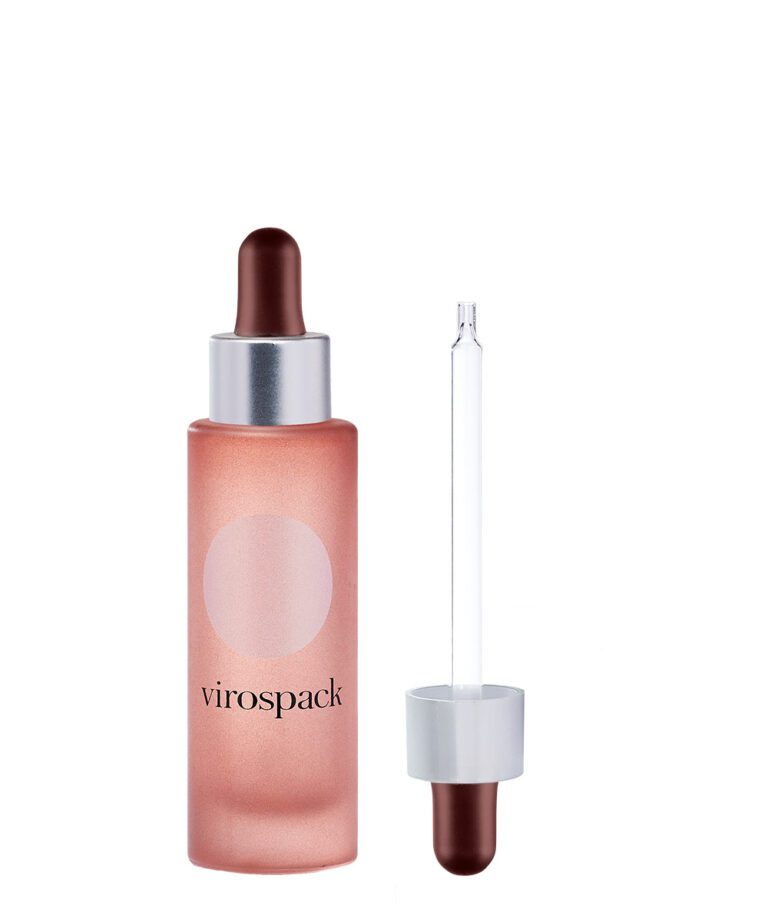
Table of Contents
What Are Frosted Glass Bottles?
Frosted glass bottles are glass containers with a diffused surface finish that softens transparency and modifies how light interacts with the material.
Unlike fully transparent glass, frosted finishes scatter light across the surface, reducing direct clarity while maintaining partial visibility of the product inside.
This effect can be achieved through different processes, including:
- acid etching
- sandblasting
- sprayed coatings
- surface treatments
The result is a softer visual appearance that changes both the perception of the bottle and the overall packaging experience.

Why Frosted Glass Bottles Are Common in Premium Skincare
Premium skincare packaging often relies on restraint rather than visual excess.
Frosted glass supports this positioning by creating a softer and more controlled visual language.
The finish communicates:
- refinement
- calmness
- formulation purity
- treatment-oriented positioning
Unlike highly reflective or fully transparent surfaces, frosted glass diffuses visual intensity. This creates a more understated luxury perception, particularly suitable for serums, facial oils and active skincare products.
In many cases, the frosted effect also helps shift attention away from the packaging itself and towards the formulation experience.
How Frosted Glass Changes Light Interaction
One of the most distinctive characteristics of frosted glass is how it modifies the interaction between light and the bottle surface.
Clear glass allows direct visibility and sharp reflections. Frosted glass softens both.
Instead of producing strong highlights and transparent exposure, the surface diffuses incoming light, creating a more balanced and uniform appearance.
This changes how:
- the product colour is perceived
- reflections behave across the surface
- the bottle integrates into its visual environment
The result is a packaging system that feels softer, more stable and more controlled visually.
This effect becomes especially visible in products such as Melvita Soin Visage Sérum Rides & Éclat Bio, where the frosted pink-toned glass diffuses colour intensity and creates a softer, more organic visual effect. The surface treatment reduces harsh reflections and reinforces a calmer, more sensorial skincare identity.
A very different interpretation can be seen in SBT Cell Life Serum, where the frosted blue-toned bottle creates a colder and more clinical visual perception. Here, the diffusion effect reinforces purity, softness and formulation-focused positioning rather than vibrancy or warmth.
In both cases, frosted glass does not simply alter appearance.
It changes how light, colour and formulation perception interact together.
Frosted Glass Bottles and Product Perception
Packaging influences how consumers interpret the product before application even begins.
Frosted glass bottles tend to create a perception associated with:
- softness
- purity
- technical skincare
- premium formulations
This happens because the surface treatment reduces visual aggressiveness and creates a more muted interaction with light.
In cosmetic packaging, this softer visual behaviour is often associated with products that are:
- concentrated
- treatment-driven
- skin-focused
- designed for controlled use
At this level, the bottle becomes part of the product narrative rather than simply its container.
Droppers Catalogue
Discover our full range of droppers catalogue
The Balance Between Visibility and Protection
Frosted glass occupies an interesting position between full transparency and complete opacity.
Unlike opaque packaging, it still allows partial visibility of the product inside. At the same time, it reduces direct exposure and visual sharpness compared to clear glass.
This balance can be useful when brands want to:
- preserve a sense of visibility
- soften the appearance of the formula
- reduce direct visual exposure
- create a more refined presentation
The objective is not to hide the product completely, but to control how it is revealed.
How Frosted Finishes Affect Tactile Experience
Frosted glass changes not only visual perception, but also tactile interaction.
The surface creates a different sensory response compared to smooth, highly polished glass.
This can influence:
- grip perception
- handling comfort
- temperature sensation
- overall product feel in hand
The slightly diffused surface often feels softer and more controlled during use, reinforcing the perception of precision and care.
In premium skincare, these tactile details become part of the overall application ritual.
At this level, packaging is experienced both visually and physically.
Frosted Glass vs Clear Glass: What Changes?
The difference between frosted glass and clear glass is not limited to appearance.
Each surface treatment changes how light interacts with the bottle and how the formulation is perceived.
Clear glass prioritizes:
- maximum transparency
- direct product visibility
- sharper reflections
Frosted glass prioritizes:
- softened visibility
- diffused light interaction
- more controlled visual perception
This creates two very different packaging identities.
The contrast becomes especially visible when comparing products with similar colour palettes but different surface treatments.
In Natura Bissé C+C Vitamin, the frosted orange glass softens the intensity of the bottle and diffuses reflections across the surface. The result feels more controlled, treatment-oriented and visually calm, despite the vibrancy of the colour itself.


By contrast, Ranavat Brightening Saffron Serum uses clear glass to fully expose the richness and depth of the formula. Light passes directly through the bottle, enhancing transparency, saturation and visual intensity.
Both approaches communicate premium positioning, but through completely different visual strategies.
Frosted glass creates softness and diffusion.
Clear glass creates visibility and vibrancy.
The choice depends on how the formulation is meant to be experienced visually before application even begins.
How Bottle Construction Influences Frosted Packaging


The frosted finish is only one part of the packaging system.
The underlying bottle construction also affects how the final packaging behaves visually and physically.
Tubular Glass bottles generally provide lighter and more uniform structures, supporting minimal and highly controlled packaging designs.
Moulded glass bottles, by contrast, allow thicker bases, sculpted geometries and heavier structures that can reinforce physical presence and perceived luxury.
These differences become especially noticeable in frosted packaging because the surface finish softens reflections and makes the overall silhouette more visually important.
At this level, structure and finish work together rather than independently.
Why Frosted Glass and Dropper Systems Work So Well Together
Frosted glass and dropper systems tend to create the same type of interaction.
Both slow the experience down.
The frosted surface softens reflections and reduces visual sharpness, while the dropper introduces a more controlled and progressive application rhythm. Together, they create a packaging experience that feels deliberate rather than immediate.
This combination works particularly well in serums, facial oils and active skincare products, where the product is expected to be applied with precision rather than speed.
The interaction becomes more tactile and measured:
- the bottle feels softer visually
- the dispensing feels more controlled
- the application becomes more intentional
This is one of the reasons frosted glass is so frequently associated with dropper-based packaging systems in premium skincare.
The finish and the dispensing method reinforce the same perception:
calmness, control and formulation-focused care.
Different dispensing systems can shift this interaction further.
Traditional pipette droppers create a more manual and adaptive experience, while more engineered solutions such as push button droppers reinforce repeatability and precision.
In both cases, the frosted surface helps soften the technical nature of the dispensing system, creating a packaging experience that feels both controlled and sensorial at the same time.
When Frosted Glass Bottles Are the Right Choice
Frosted glass bottles are most effective when the product positioning aligns with their sensory and visual language.
They work particularly well for:
- premium skincare
- active serums
- facial oils
- treatment-oriented cosmetic products
They are especially suitable when the objective is to create:
- softened visual perception
- tactile sophistication
- controlled product presentation
- understated luxury positioning
The decision should not be based on decoration alone, but on how the finish supports the intended product experience.
FAQs About Frosted Glass Bottles
What are frosted glass bottles used for in cosmetics?
They are commonly used for premium skincare, serums and cosmetic products that require a softer and more refined visual presentation.
Do frosted glass bottles fully hide the product?
No. Frosted glass reduces direct visibility but still allows partial perception of the formula inside the bottle.
Why are frosted bottles associated with luxury skincare?
Because the diffused finish creates a softer, calmer and more treatment-oriented visual identity.
Are frosted glass bottles compatible with dropper systems?
Yes. They are frequently combined with droppers in serums and active skincare products where controlled dispensing is important.
What is the difference between frosted glass and clear glass?
Clear glass prioritizes full visibility and sharper reflections, while frosted glass softens light interaction and creates a more controlled visual experience.