

Skincare Packaging Ideas for High-End Brands: Elevating Serums and Oils with Signature Droppers
The best skincare packaging ideas for high-end brands start with the piece the consumer touches every day: the dropper. For serums and facial oils, a signature dropper, paired with the right glass bottle, color and decoration, can make a product recognizable at a glance, justify its price and turn daily application into a ritual. Below you will find 12 skin care packaging ideas used by premium brands, real examples, a guide by type of formula and a step-by-step process to package your own product.
Key takeaways
- In premium skincare, the dropper is a branding element, not just a closure.
- Glass color, weight and finish can tell the story of the formula before the consumer reads the label.
- Consistency across a range builds recognition faster than a single spectacular pack.
- The most effective ideas combine design and function: dosing precision, protection and ease of use.
- Every idea should be tested against the formula, the price point and the brand’s long-term identity.
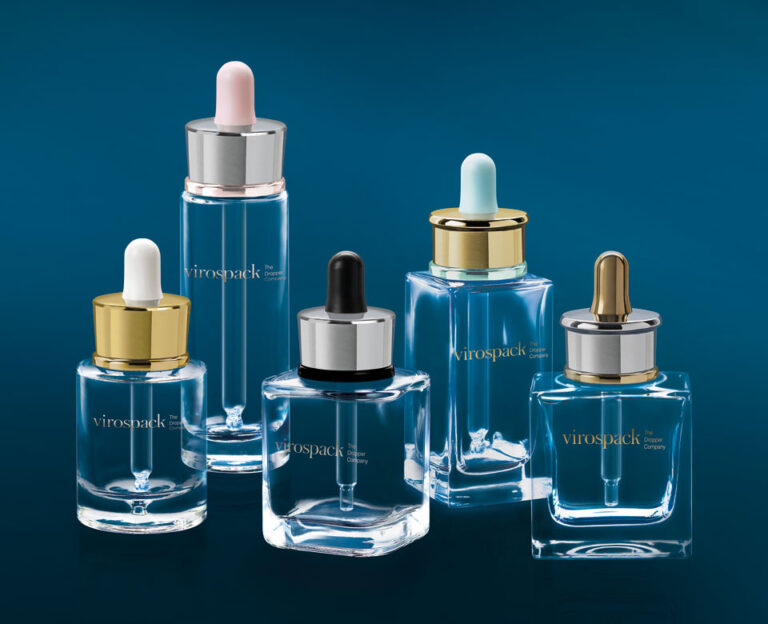
Table of Contents
What makes a good skincare packaging idea?

Serums and facial oils are among the most valuable products in a skincare routine. They are used a few drops at a time and handled every morning and evening for weeks, which makes their packaging one of the strongest brand touchpoints a skincare company has. A good packaging idea for these products is one that works both on the shelf and in daily use, and it meets five conditions at the same time:
- It protects the formula: active ingredients such as vitamin C, retinoids or botanical oils need protection from light and air.
- It doses precisely: concentrated formulas are used a few drops at a time, so dispensing must be accurate and clean.
- It is recognizable: the consumer should identify the brand from a distance, even without reading the label.
- It scales: the idea should work across a full range and in different sizes.
- It can be produced consistently: a beautiful concept is useless if it cannot be manufactured, decorated and assembled with the same quality every time.
This is why glass bottles with droppers dominate premium skincare: they meet all five conditions, and the dropper itself becomes a signature gesture that consumers associate with the brand. If you are looking for inspiration across all beauty categories, including makeup and color, see our selection of packaging ideas for beauty products. The ideas below focus specifically on high-end serums and oils.
12 skincare packaging ideas for serums and oils
1. Turn the collar into a jewelry piece
The collar is the most visible part of the dropper on the shelf. Metallized finishes in gold, silver, rose gold or custom tones, applied with metallization or sputtering, give it the look of a jewelry piece. A polished collar on clear or tinted glass is one of the simplest ways to signal luxury without adding complexity to the pack.
2. Choose a dropper mechanism that becomes your brand gesture
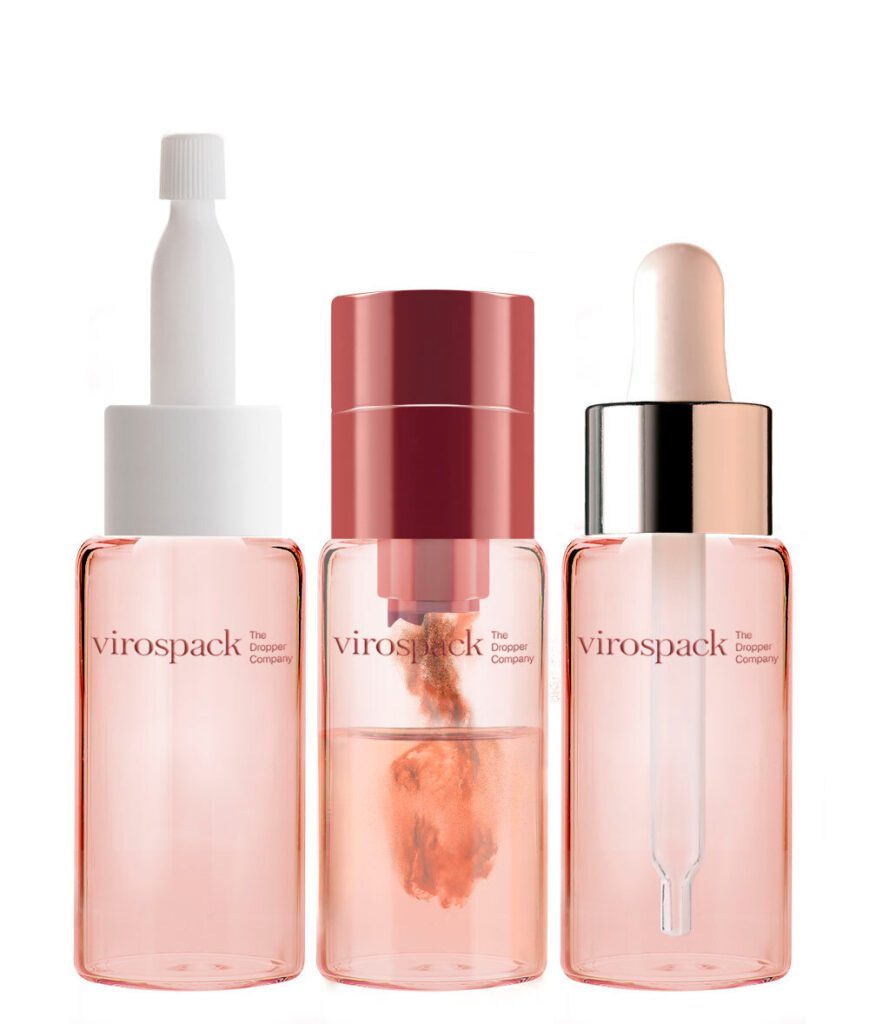
The way a dropper works is part of the experience. A classic bulb dropper offers intuitive, manual control. A push button dropper loads the pipette with a single press for a more technical, precise ritual. A magnetic dropper adds a tactile moment when the bottle is closed. Choosing one mechanism and using it consistently turns the gesture itself into a brand signature. Virospack’s range of droppers covers these options, from classic designs to push button and magnetic systems.
3. Match the dropper to the glass for a tone-on-tone look
A dropper whose bulb and collar echo the color of the bottle creates a calm, cohesive object that feels designed rather than assembled. The SBT Cell Life Serum, featured in our showroom, shows this approach: a softly tinted, matte aqua glass bottle is paired with a white bulb and a white collar, so the closure and the glass read as a single piece. The result is clean, modern and immediately recognizable on a crowded shelf.
4. Let the glass color tell the ingredient story
Glass color can communicate what is inside before the consumer reads a word. The Apivita Wine Elixir Firming Oil, also part of our showroom, uses a deep wine-red glass bottle with a black dropper. The color evokes the grape-derived ingredients behind the formula and gives the oil a rich, concentrated presence. Tinted glass also helps protect light-sensitive actives, so the design choice has a functional benefit as well.

5. Use dark glass and vertical typography for treatment products
Night treatments, repair serums and concentrated actives benefit from a more serious, clinical aesthetic. The Germaine de Capuccini Timexpert SRNS night serum in our showroom is a clear example: a dark glass bottle with the brand name set vertically along its side, a white bulb and a polished silver collar. The vertical typography makes the bottle feel taller and more architectural, while the dark glass conveys potency and helps shield the formula from light.
6. Build weight and proportion into the bottle
Weight is one of the first signals of value a consumer perceives. Moulded glass bottles with thick walls and a heavy base feel substantial in the hand and allow distinctive silhouettes. Some designs also include a last-drop system, so the consumer can use the formula until the very end, a functional detail that reinforces the premium experience.
7. Add special effects with gradients and pearlescent finishes
Aerographic spray lacquering makes it possible to create gradients, pearlescent effects and multi-layer finishes on glass. A gradient from clear to color can suggest the concentration of a formula, while a pearlescent finish adds light and movement. These effects work especially well for hero serums that need to stand out in a range.
8. Play with texture on the cap and the glass
Luxury is felt as much as it is seen. Ribbed or textured caps, soft-touch coatings and embossed details invite the consumer to touch the pack and give the dropper a distinctive grip. Texture is also a subtle way to differentiate products within the same range without changing the bottle shape.
9. Design a family, not a single product
High-end brands rarely sell one serum. A strong packaging idea is to create a family of products that share visual codes while allowing each one to have its own personality. The Yue Sai range in our showroom illustrates this: three bottles in white, silver and dark smoked tones use different dropper heads and finishes, yet the shared red logo and consistent proportions make them clearly part of the same line. The consumer can tell the products apart instantly, while the brand remains unmistakable.
10. Make transparency part of the design
For facial oils and colored serums, clear glass lets the formula become the main visual element. A golden oil or a pale pink serum behind clear glass needs very little decoration to look premium. A discreet print and a refined dropper are enough to frame the product.
11. Offer minis and discovery sizes that look as premium as the full size
Travel sizes, samples and discovery sets introduce new consumers to a brand. Small tubular glass vials with droppers, decorated with the same codes as the full-size bottle, keep the premium experience intact at a smaller scale and encourage the move to the full product.
12. Choose sustainable options that do not show
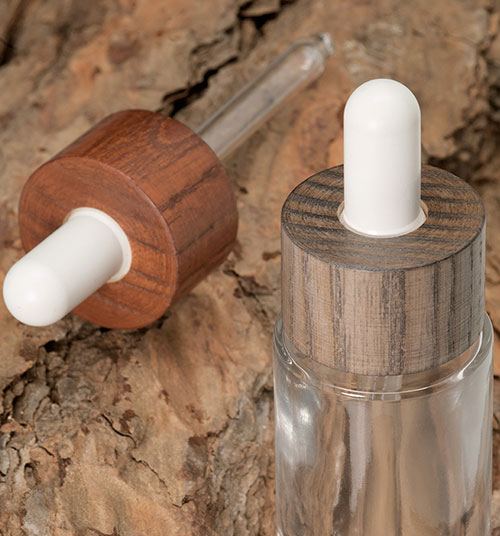
Eco-design no longer requires a rustic look. Droppers with PCR, bio-based or wood components, mono-material dropper designs and water-based decoration processes reduce environmental impact while keeping the pack’s premium appearance. Durable glass bottles designed to be kept also make refill strategies more credible.
Skincare packaging ideas by type of formula
Formula | Packaging ideas that work best |
Vitamin C and light-sensitive serums | Tinted or dark glass, tone-on-tone dropper, precise dosing |
Facial oils | Clear glass to show the oil, metallized collar, heavy moulded base |
Night and repair treatments | Dark glass, minimal typography, push button dropper |
Hydrating and fresh serums | Soft tinted or frosted glass, light-colored dropper |
Hero and limited-edition products | Gradients, pearlescent effects, textured caps |
Discovery and travel sizes | Tubular glass vials with droppers in the same codes as the full size |
How to choose the right idea for your brand
Not every idea suits every brand. Before deciding, consider:
- Positioning: clinical, natural, luxurious or playful brands call for different codes.
- Formula: viscosity, light sensitivity and dose determine the glass, the dropper and the bulb material.
- Range strategy: a design that scales across products and sizes builds recognition faster.
- Price point: the perceived value of the pack should match the price of the formula.
- Consistency: a signature works only if it is repeated across the line.
For a deeper look at how premium brands combine glass, color and droppers in their designs, see our guide to skincare packaging design.
Droppers Catalogue
Discover our full range of droppers catalogue

How to package skincare products: a step-by-step approach
- Start with the formula: define viscosity, light and air sensitivity, dose per application and capacity.
- Choose the dispensing system: classic, push button or magnetic dropper, with a bulb material compatible with the formula.
- Select the glass: moulded glass for weight and distinctive shapes, tubular glass for light, precise small formats; clear, tinted or amber depending on protection needs.
- Define the signature: pick one or two elements, such as collar finish, glass color or texture, and apply them consistently across the range.
- Decorate and test: validate decorated samples, test the formula with the packaging for stability and dispensing, and only then move to production.
Bringing these ideas to life with Virospack
Virospack has spent decades specializing in droppers and glass packaging for the beauty industry. Glass, rubber bulbs, pipettes, plastic components and all decoration processes, from metallization and lacquering to screen printing and hot stamping, are produced in its own facilities. That control over every component is what allows brands to develop a truly signature dropper and bottle, rather than adapting a standard part.
Frequently asked questions about skincare packaging ideas
What are the best skincare packaging ideas for luxury brands?
The most effective ideas combine glass bottles with signature droppers: metallized collars, a distinctive dropper mechanism, glass colors that reflect the formula, tone-on-tone closures, textured caps and a consistent design across the range.
What is the best packaging for skin care products?
It depends on the formula. For serums and facial oils, glass bottles with droppers are the reference in premium skincare because glass protects the formula and the dropper delivers a precise dose. Light-sensitive formulas benefit from tinted or amber glass.
Why do high-end serums use dropper bottles?
Droppers deliver precise doses of concentrated formulas, limit contact with air and fingers, and create a premium application ritual. In glass, they also protect the formula and convey quality.
How can I make my skincare packaging stand out?
Choose one or two strong signatures, such as a distinctive dropper collar, a characteristic glass color or a recognizable texture, and apply them consistently across your range so consumers recognize your products instantly.
What color glass is best for serums?
Amber, dark and tinted glass help protect light-sensitive actives such as vitamin C and retinoids. Clear glass works well for stable formulas and oils whose color is part of the product’s appeal.
What is a push button dropper?
It is a dropper that loads the pipette with a single press of a button instead of squeezing a bulb. It offers a repeatable dose and a modern, technical gesture often used in high-end skincare.
Can luxury skincare packaging be sustainable?
Yes. Glass is durable and recyclable, and droppers can be made with PCR, bio-based, wood or mono-material components. Water-based decoration processes reduce environmental impact without compromising the premium finish.
How do I keep a consistent look across a skincare range?
Use a shared bottle shape or dropper as a platform and differentiate products through glass color, decoration or texture. This keeps the range coherent while allowing each product its own identity.