

From Stoppers to Droppers: How Glass Bottle Closures Evolved in Cosmetic Packaging
In short: the glass bottle with stopper was the original closure for perfumes, tinctures and apothecary preparations. A ground glass stopper sealed the bottle and, in some perfume bottles, also served to apply the product. Over time, cosmetic packaging moved towards closures that seal better, dose more precisely and protect the formula from contamination: first screw caps, then droppers and, more recently, push-button and magnetic droppers. Today, a dropper combined with a wiper in the neck of the bottle offers what the stopper never could: a controlled dose, a clean neck and a well-protected formula.
This guide explains how each closure works, why the industry moved from stoppers to droppers, what a wiper is and how it differs from a stopper, and how to choose the right closure for a modern cosmetic formula.
Table of Contents
A short timeline of cosmetic glass bottle closures
Closure | How it works | What it brought to cosmetics | Main limitation |
Glass stopper | A glass plug, often ground to fit one specific neck | Reusable, elegant closure for perfumes and apothecary bottles | No dose control; seal depends on a precise fit |
Cork stopper | A compressible natural plug pushed into the neck | Low-cost sealing for many bottles | Can dry out, crumble or absorb odours |
Screw cap | A cap threaded onto a standardised neck finish | Reliable, repeatable seal and interchangeable components | Opens the whole neck; no dosing |
Dropper | Collar, rubber bulb and pipette that draw and release the liquid | Precise drop-by-drop dosing of concentrated formulas | Needs compatible materials and a good fit with the bottle |
Push-button dropper | A button replaces the squeeze bulb to load the pipette | More controlled, cleaner gesture | More components to develop |
Magnetic dropper | A dropper with magnetic closure | A satisfying, leak-free closing gesture | Requires a compatible neck finish |
The glass bottle with stopper: where it all began
Glass stoppers are one of the oldest closures in packaging. Their use became widespread in the 19th century, and they were particularly suited to bottles meant to be kept and reused for a long time, such as perfume and apothecary bottles. The part of the stopper that sits inside the neck, called the shank, could be ground so that it fitted one specific bottle almost perfectly.
In perfumery, the stopper often did more than close the bottle. Many perfume bottles used a dauber, a glass rod attached to the stopper, to pick up a small amount of fragrance and apply it directly to the skin. It was an early form of dosing, and the origin of the ritual of applying a precious formula drop by drop.
Today, a glass bottle with stopper is still appreciated for its decorative, apothecary-inspired look. But for modern cosmetic formulas, it has clear limitations:
- No real dose control. The amount applied depends on the user.
- Hygiene. The stopper or dauber touches the skin and then goes back into the formula.
- Sealing. Without a perfect fit, air can enter and volatile ingredients can evaporate.
- Fit and production. Ground stoppers have to match each neck, which makes them harder to produce consistently at scale.
Cork and screw caps: sealing becomes standard
Cork offered a cheaper alternative to glass stoppers, but it can dry out, crumble or absorb odours, which is a problem for fragrances and delicate formulas.
The real turning point was the screw cap. Threaded caps on standardised neck finishes allowed bottles and closures from different production runs to fit reliably. Standard neck finishes, such as the GCMI references common in the US and the DIN-based Europa finishes common in Europe, are still the basis of cosmetic closures today, including droppers.
A screw cap seals well, but it opens the whole neck and does nothing to help the user dose the product. For concentrated serums, oils and treatments, that was not enough.

Droppers Catalogue
Discover our full range of droppers catalogue

The dropper: precision for concentrated formulas
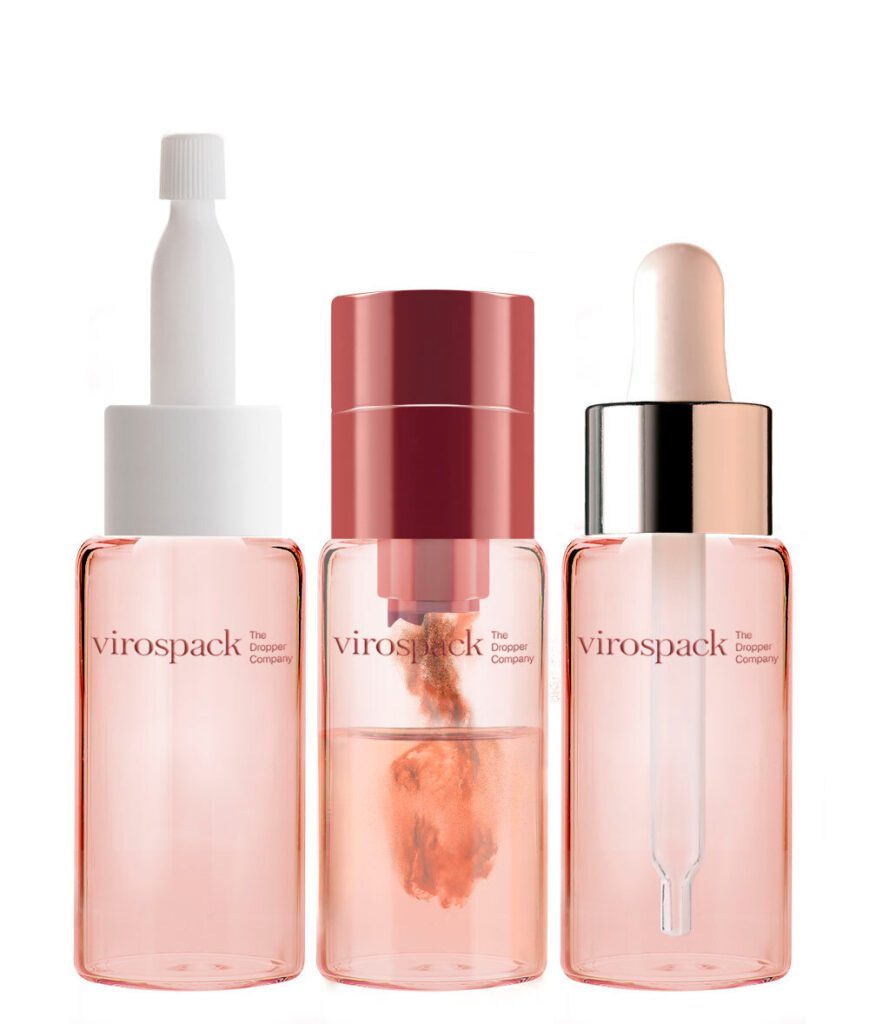
The dropper combines three elements: a collar that screws onto the bottle, a rubber bulb that creates suction and a pipette that draws and releases the liquid. Glass pipettes are often associated with Louis Pasteur, who gave his name to the Pasteur pipette used in laboratories since the 19th century. In cosmetics, the dropper brought that laboratory precision to the bathroom shelf.
Its advantages explain why it became the reference closure for serums, oils, eye treatments and liquid makeup:
- Precise dosing: the user applies exactly the number of drops recommended.
- Better hygiene: the formula does not touch the skin before it is dispensed.
- Protection: the bottle stays closed between uses, limiting air exposure.
- Ritual and perceived value: the drop-by-drop gesture signals a concentrated, effective formula.
Kiehl’s is a good example of this evolution. The brand began in 1851 as an apothecary in New York’s East Village, the kind of shop where preparations were kept in glass bottles with stoppers. Today its Midnight Recovery Concentrate, featured in Virospack’s showroom, comes in a glass bottle with a dropper and is applied two to three drops at a time. The apothecary spirit remains, but the closure has evolved to deliver a precise, hygienic dose.
Modern dropper can be adapted in every component: collar material and finish, bulb material for formula compatibility, and pipette length and tip for the right drop size. For a closer look at how the pipette works, see our article on what a pipette is used for.
What is a wiper, and how is it different from a stopper?
A wiper is a small insert fitted inside the neck of the bottle. It is not a closure and does not seal the bottle like a stopper. Its job is to wipe the pipette or applicator as it is withdrawn from the bottle, removing the excess product that would otherwise drip.
In a dropper bottle, a wiper:
- Removes excess formula from the outside of the pipette, so the dose is more consistent.
- Prevents drips on the neck, the collar and the user’s hands.
- Keeps the neck cleaner, which helps the dropper close properly and limits residue build-up.
- Improves the overall experience, especially with oils and more fluid formulas.
Stopper | Wiper | |
Function | Closes and seals the bottle | Cleans the pipette or applicator on the way out |
Position | Inserted into the neck as the closure | Fitted inside the neck, under the closure |
Used with | On its own | Droppers and applicators |
Benefit | Protection and presentation | Cleaner dosing and a tidier pack |
Virospack’s moulded glass bottles can be specified with a wiper, so the bottle and the dropper work together from the first drop to the last.


The latest step: push-button and magnetic droppers
Dropper technology continues to evolve. Push-button droppers replace the squeeze bulb with a button, which makes loading the pipette easier and the gesture cleaner and more controlled. Magnetic droppers go a step further in the closing experience: Virospack’s magnetic dropper uses a magnetic closure for a leak-free seal and a distinctive gesture, while remaining fully decorable.
These innovations follow the same logic that began with the glass stopper: protecting a valuable formula and turning its application into a ritual, but with far more precision, hygiene and reliability.
Glass stopper or dropper: which closure should you choose?
If your product is… | Best closure |
A decorative or limited-edition bottle, where appearance comes first | Glass stopper |
A serum, face oil or concentrated treatment | Dropper, ideally with a wiper |
A formula that needs a very controlled dose | Push-button dropper |
A premium product where the closing gesture is part of the experience | Magnetic dropper |
A thicker texture that does not flow through a pipette | Other dispensing systems, such as caps or pumps |
If you are still comparing dispensing systems, our guide on dropper vs dispenser explains the differences in more detail.

Questions to ask before choosing a closure
- Does the formula need precise dosing, or can it be applied freely?
- Is the formula sensitive to air or contamination?
- Is the bulb material compatible with the oils, actives or fragrance in the formula?
- Does the pipette reach the bottom of the bottle?
- Would a wiper improve the dose and keep the neck clean?
- Does the closure fit the neck standard used in your target markets?
- Does the closing gesture match the brand experience?
Why Virospack
For almost 70 years, Virospack has specialised in droppers for beauty brands. Glass bottles, pipettes, bulbs, collars, decoration and assembly are developed and produced in its own facilities in Spain, so the bottle and the closure can be designed as one system. If you are developing a dropper bottle or rethinking the closure of an existing product, contact our team.
Frequently asked questions
What is a glass bottle with stopper used for in cosmetics?
Historically, it was used for perfumes, tinctures and apothecary preparations. Today it is mainly chosen for its decorative, vintage look, while most functional cosmetic products use screw caps, droppers or pumps.
Is a glass stopper airtight?
Only when the stopper fits the neck very precisely. Ground glass stoppers can seal well, but they are harder to produce consistently than modern threaded closures.
Why did cosmetic packaging move from stoppers to droppers?
Because droppers offer precise dosing, better hygiene and more reliable protection of the formula, which became essential with concentrated serums, oils and active treatments.
What is a wiper in a dropper bottle?
A wiper is an insert fitted in the neck of the bottle that removes excess product from the pipette as it is withdrawn. It prevents drips, keeps the neck clean and helps deliver a more consistent dose.
Is a wiper the same as a stopper?
No. A stopper closes the bottle, while a wiper sits inside the neck and cleans the pipette or applicator. A wiper is used together with a closure such as a dropper.
Can a glass stopper be used for skincare serums?
It is possible, but not ideal. A stopper does not control the dose and the formula may be exposed to air and contamination. A dropper with a wiper is usually a better choice for serums.