

Which Skincare Packaging Is Eco-Safe and Durable?
Short answer: for most serums, oils and concentrated skincare, glass is the most eco-safe and durable packaging. It is chemically inert, so it does not release substances into the formula, it can be recycled repeatedly without losing quality, and it lasts long enough to be reused or refilled. Its environmental performance improves further when the closure uses recycled or bio-based materials, when the glass is not heavier than necessary and when the pack is designed to protect the formula until the last drop.
Other materials can play a role, but each has limits. This guide compares the main options, explains what “eco-safe” and “durable” really mean in skincare, and shows how to avoid the most common greenwashing traps.
Table of Contents
What does "eco-safe and durable" mean for skincare packaging?
An eco-safe and durable pack has to meet five conditions at the same time:
- Safe for the formula and the user: the material does not interact with the product or release unwanted substances into it.
- Recyclable in practice: not only in theory, but in real collection and recycling systems.
- Durable in use: it resists daily handling, temperature changes and time without degrading.
- Protective: it keeps the formula stable, so the product is not wasted before it is used up.
- Reusable or refillable: it can have a second life instead of being discarded after one use.
Many packaging claims focus on only one of these points. A material can be “plant-based” but impossible to recycle, or recyclable but too fragile to protect the product. The best choice is the one that performs well across all five.

Skincare packaging materials compared
Material | Formula safety | Durability | End of life | Best for |
Glass | Inert and impermeable | Does not degrade; can break if dropped | Recyclable repeatedly without loss of quality; reusable | Serums, oils, concentrates, premium skincare |
Aluminium | Good barrier; usually needs an inner coating | Very resistant, can dent | Highly recyclable | Caps, overshells, some tubes and bottles |
Recycled plastic (PCR) | Depends on the resin and the formula | Light and shatter-resistant, can scratch or deform | Recyclable in some systems; quality decreases with each cycle | Closures, collars, rinse-off products |
Virgin plastic | Depends on the resin; more permeable than glass | Shatter-resistant | Often downcycled or not recycled | Mass-market formats |
Bioplastics (e.g. PLA) | Variable; limited barrier properties | Sensitive to heat and humidity | Often requires industrial composting; usually not recyclable with conventional plastics | Limited use in skincare |
Paper and cardboard | Not suitable for direct contact with liquids | Low resistance to water | Widely recyclable | Secondary packaging: boxes, inserts |
Why glass is the most eco-safe choice for skincare
It does not interact with the formula. Glass is chemically stable and impermeable, so it does not absorb ingredients, release substances into the product or let oxygen through its walls. For active serums and natural oils, that is both a safety and a performance advantage. Our article on glass bottle properties explains these characteristics in more detail.
It can be recycled again and again. Glass can be remelted repeatedly without losing quality, and recycling systems for it are well established. In the EU, 80.8% of glass packaging was collected for recycling in 2023, according to Close the Glass Loop. Results depend on local infrastructure, though: in the United States, the EPA estimates that just over 30% of glass containers are recycled. That is why designing for reuse and refill matters as much as recyclability.
It is made to last. Glass does not scratch easily, deform or age with use, which makes it suitable for products kept for months and for bottles that consumers want to keep and reuse.
Herbivore, whose Prism Exfoliating Glow Potion is featured in Virospack’s showroom, illustrates this approach. The brand has explained that it switched to 100% recyclable glass bottles instead of plastic whenever possible and actively encourages customers to reuse its glass bottles and jars. It is a good example of how glass supports both recyclability and a second life for the pack.

The weak points of glass, and how to solve them

Glass is not perfect. Its two main weaknesses are weight and breakage, and both can be addressed through design:
- Avoid unnecessary weight. A thick base and balanced proportions give a premium feel without adding excess glass, which reduces material use and transport emissions.
- Choose the right format. Tubular glass is lighter and very precise, which makes it efficient for small formats, concentrates and travel sizes.
- Add protection where needed. Metal shell bottles combine a glass container with a metal overshell that protects it from knocks and makes it more resistant in daily use, while giving the pack a durable, keep-worthy design.
Droppers Catalogue
Discover our full range of droppers catalogue
Durability also means protecting the formula
A pack that lets the formula degrade before it is used up is not sustainable, even if it is recyclable. Wasted product is also wasted resources. Durable skincare packaging must protect against three main risks:
- Light: amber glass or opaque lacquering filters part of the light that can degrade sensitive actives. Our guide on how much UV glass blocks compares the protection offered by different types of glass.
- Air: a well-fitted closure limits oxidation between uses.
- Contamination: dispensing systems that release only the dose needed keep the rest of the formula untouched.
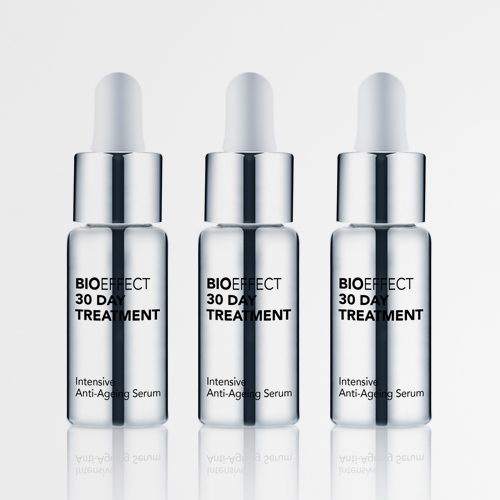
BIOEFFECT’s 30 Day Treatment, developed and decorated by Virospack and featured in its showroom, shows how format choices support this. The treatment is divided into three 5 ml dropper bottles, and the precise dropper releases the serum drop by drop while keeping the rest of the formula protected from contamination. Small, well-sealed formats help a concentrated serum stay effective throughout the treatment.
The closure: the most overlooked part of sustainable packaging
Most skincare packs are not made of one material. The bottle may be glass, but the dropper, pump or cap usually combines plastics, rubber and sometimes metal. That is where many packs lose part of their sustainability.
Brands can improve the closure in several ways:
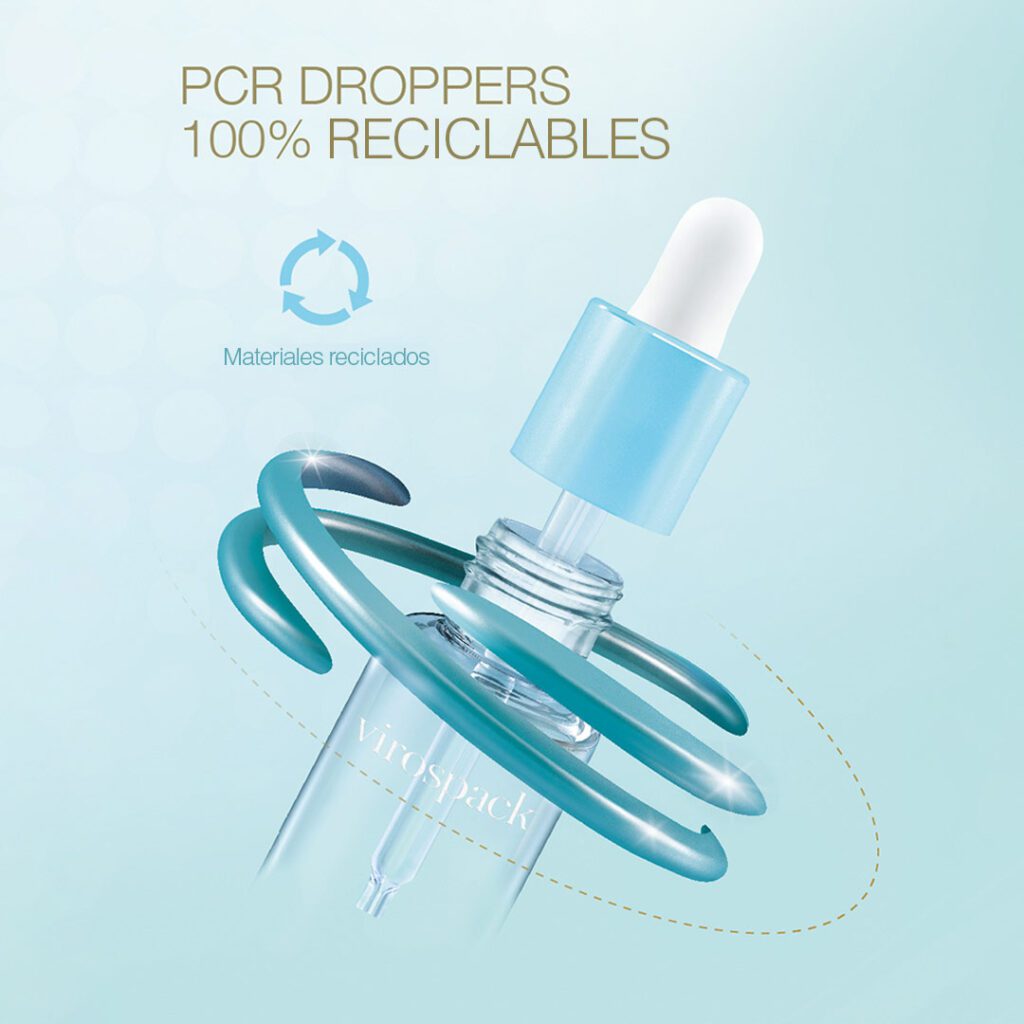
- Using post-consumer recycled (PCR) or bio-based plastics for collars and caps.
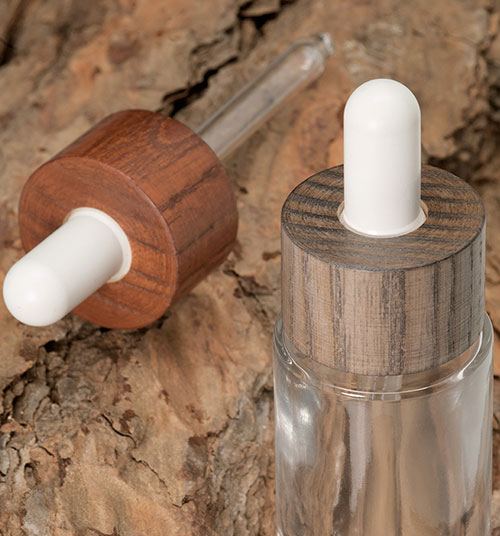
- Choosing natural materials, such as wood, where they fit the brand and the formula.
- Reducing the number of materials and making components easy to separate for recycling.
- Avoiding unnecessary components, such as decorative parts that add material without adding function.
Virospack droppers are available with collars in PCR, bio-based materials and wood, among other options, so the closure can follow the same sustainability logic as the glass bottle.
Refill and reuse: extending the life of the pack
The most sustainable pack is often the one that does not need to be replaced. Refillable formats, reusable bottles and designs that consumers want to keep all extend the useful life of packaging. Glass is especially suited to this, because it does not degrade with repeated use and can be cleaned easily.
When planning refill, brands should consider how the refill will be delivered, whether the closure can be removed and reused, and whether the main bottle is robust and attractive enough to stay on the bathroom shelf for years.
Greenwashing red flags in skincare packaging

- “Biodegradable” without conditions. Many bioplastics only break down in industrial composting facilities. A 2023 study published in PLOS One found that PLA showed no sign of degradation after 428 days in seawater.
- “Recyclable” without context. A material is only truly recyclable if it is collected and processed where the product is sold.
- Plant-based does not mean recyclable. Some bio-based plastics cannot be recycled with conventional plastics.
- Light packaging that fails the formula. If the product degrades early, the environmental cost increases.
- Claims without evidence. Reliable suppliers can document materials, recycled content and certifications.
Regulations are raising the bar
Sustainable packaging is no longer only a brand choice. In Europe, the Packaging and Packaging Waste Regulation (PPWR), applicable from August 2026, sets stricter requirements on recyclability, packaging minimisation and documentation. In the United States, several states have adopted extended producer responsibility (EPR) laws that make brands responsible for the packaging they place on the market. Choosing recyclable, durable materials such as glass helps brands prepare for both.
Checklist: is your skincare packaging eco-safe and durable?
- Is the main container made of an inert material that does not interact with the formula?
- Is it recyclable in the markets where the product is sold?
- Does it avoid unnecessary weight and components?
- Does it protect the formula from light, air and contamination?
- Does the closure use recycled, bio-based or natural materials where possible?
- Can the pack be reused or refilled?
- Can every sustainability claim be backed by documentation?
How Virospack approaches sustainable skincare packaging
Virospack has specialised in glass packaging and droppers for beauty brands for almost 70 years, producing glass, closures, decoration and assembly in its own facilities in Spain. Its work combines durable glass, closures with recycled, bio-based or natural materials and water-based decoration processes, and the company has held an EcoVadis Gold Medal for four consecutive years.
If you are developing skincare packaging that needs to be both sustainable and durable, contact our team to discuss your project.


Frequently Asked Questions About Glass Dropper
What is the most eco-friendly packaging for skincare?
For serums, oils and concentrated skincare, glass is usually the most eco-friendly option because it is inert, recyclable repeatedly and durable enough to be reused or refilled. Its impact is lowest when it is not heavier than necessary and is combined with closures made from recycled or bio-based materials.
Is glass packaging safe for skincare?
Yes. Glass is chemically stable and impermeable, so it does not release substances into the formula or absorb its ingredients. That is why it is widely used for sensitive actives and natural oils.
Is glass better than recycled plastic for skincare?
For most leave-on skincare, yes. Glass protects the formula better and can be recycled without losing quality. Recycled plastic is useful for closures and lighter formats, but its quality decreases with each recycling cycle.
Are biodegradable plastics a good option for skincare packaging?
Often not. Many only break down in industrial composting facilities, are not recyclable with conventional plastics and offer limited protection for liquid formulas.
How can glass skincare packaging be made more durable?
Through a solid base, the right wall thickness, protective metal overshells and well-fitted closures. Choosing the right format, such as tubular glass for small sizes, also helps.
Which packaging protects skincare formulas best?
Amber or lacquered glass with a well-sealed dropper or closure offers excellent protection from light, air and contamination, especially for serums with sensitive actives.