

Cosmetic Packaging Solutions: Droppers and Glass Bottles for High-End Beauty
Cosmetic packaging solutions are the complete system that takes a beauty formula from the lab to the consumer’s hand: the container, the closure, the dispensing mechanism, the decoration and the development work that makes all of them perform together. For serums, facial oils, concentrates and other high-value liquid formulas, the most complete solution in premium beauty is a glass bottle paired with a dropper, designed and manufactured as a single unit rather than sourced as separate parts.
This guide explains what a real packaging solution includes, how to choose the right dropper and glass bottle for each type of formula, which decoration options build a premium identity, and what to ask a manufacturer before you commit to a project.
Key takeaways
- A packaging solution is more than a bottle: it combines glass, dropper, wiper, decoration, assembly and quality control.
- Glass bottles with droppers dominate high-end skincare because they protect sensitive formulas, dose precisely and communicate value.
- The formula should decide the format: viscosity, light sensitivity and dose size determine the glass, the pipette and the bulb material.
- Decoration (printing, hot stamping, metallization, lacquering, gradients) turns a technical pack into a recognizable brand asset.
- Working with a manufacturer that produces every component in-house reduces compatibility problems, timelines and quality risks.
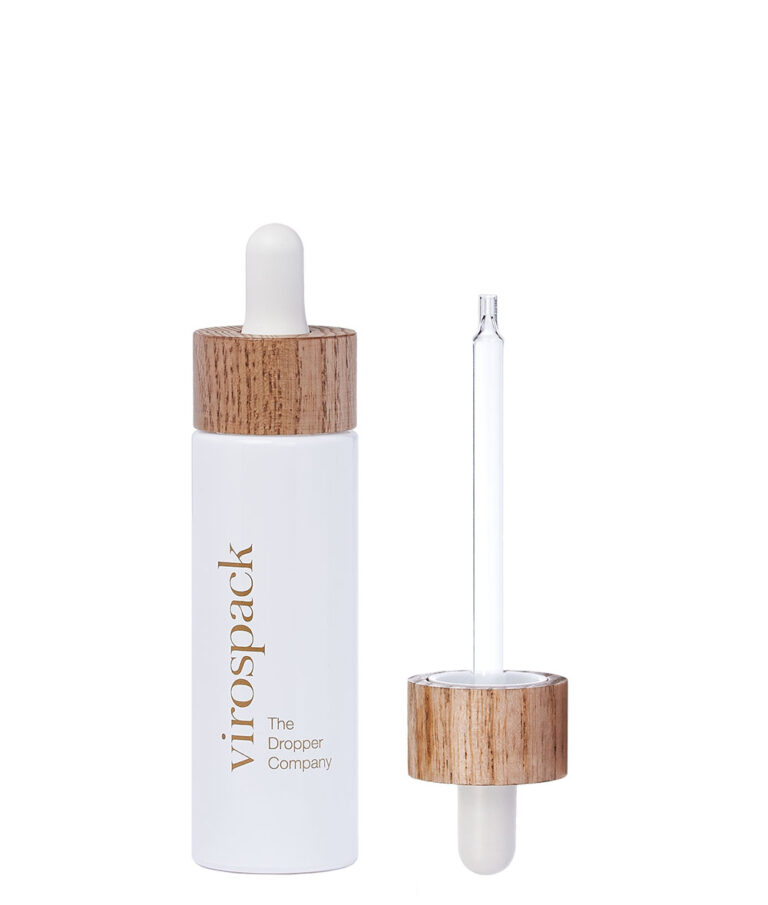
Table of Contents
What does "cosmetic packaging solution" really mean?

Many suppliers use the word “solution” to describe a product listing: a jar, a tube or a bottle available from stock. For a brand launching a premium product, a solution means something broader. It is the answer to a set of technical and commercial questions at the same time:
- Protection: will the pack keep the formula stable for its full shelf life?
- Dispensing: does it deliver the right amount of product, cleanly, every time?
- Compatibility: do the bulb, pipette, gasket and glass work with this specific formula?
- Brand expression: does the pack look and feel like the price on the shelf?
- Industrialization: can it be produced, decorated, assembled and filled consistently at scale?
When these questions are answered by different suppliers, the brand ends up coordinating them, and small mismatches between a bottle neck and a dropper collar, or between a bulb material and an oil, can delay a launch. That is why premium brands increasingly look for a single partner that designs and produces the full dropper-and-bottle system.
Why droppers and glass bottles lead in high-end beauty
Glass remains the reference material for prestige skincare. It is chemically inert, offers a very effective barrier against oxygen and moisture, and can be tinted, coated or decorated without compromising the formula inside. Its weight and clarity also send an immediate signal of quality, which is why it is so closely linked to high-end cosmetic packaging.
The dropper completes the system. Active-rich formulas such as vitamin C, retinoids, peptides or acids are used in small, precise doses. A dropper lets the consumer take exactly what the routine requires, limits contact between the formula and fingers, and turns application into a deliberate ritual. In other words, the dropper is both a functional tool and part of the luxury experience.
The Clinique Moisture Surge active glow serum, featured in our showroom, shows how both functions work together. Its formula combines hyaluronic acid, vitamin C and AHA, ingredients that are applied in small amounts. A classic dropper with a white bulb and a polished silver collar gives the consumer controlled dosing, while the wide, soft-shouldered bottle in the line’s signature pink makes the product instantly recognizable as part of the Moisture Surge family. Dosing precision and brand recognition come from the same pack.

The anatomy of a dropper and glass bottle solution
A dropper looks simple, but every component has a technical role. Specifying each one correctly is what separates a pack that performs from one that leaks, drips or degrades the formula.
Component | What it does | What to specify |
Glass bottle | Contains and protects the formula | Capacity, shape, glass color or tint, moulded or tubular glass, neck finish |
Bulb or push button | Creates the vacuum that draws the product into the pipette | Bulb material (nitrile, butyl or natural rubber) compatible with the formula; classic bulb or push button mechanism |
Pipette | Holds and releases the dose | Length adapted to the bottle, tip shape, glass or plastic, dose volume |
Collar or cap | Closes the bottle and carries much of the visual identity | Material, metallized or lacquered finish, texture, weight |
Wiper | Removes excess product from the pipette as it is withdrawn | Fit to the pipette diameter and the viscosity of the formula |
The wiper deserves special attention because it is often confused with a stopper. A stopper simply seals an opening. A wiper is a small insert in the neck of the bottle that cleans the outside of the pipette as the consumer lifts it out, so the drops fall from the tip instead of running down the glass. A well-fitted wiper means cleaner dosing, less product waste and no residue on the neck or the label, details that consumers of premium skincare notice immediately.
Choosing the right dropper system
There is no single “best” dropper. The right mechanism depends on the formula, the routine and the experience the brand wants to create. Virospack’s range of cosmetic droppers covers the main options:
- Classic bulb droppers: the most recognizable format in skincare. Squeezing the bulb fills the pipette, giving the consumer intuitive control over the dose. Ideal for serums, facial oils and concentrates.
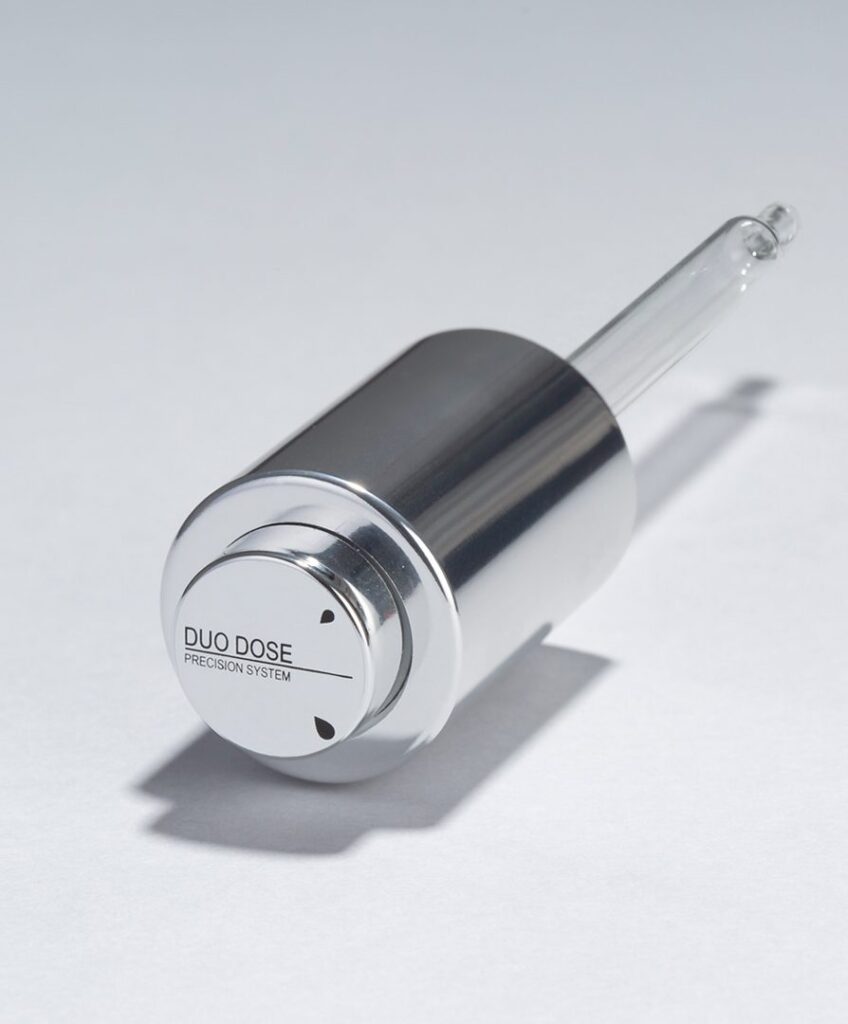
- Push button droppers: a press of the button loads the pipette in a single, repeatable movement. They offer a more technical, modern gesture and a very clean silhouette.
- Magnetic droppers: a closure concept that uses magnetism to add a premium, tactile moment to opening and closing the bottle.
- Duo Mix systems: designed to keep two components separate until the consumer mixes them, ideal for formulas that are best activated at the moment of use.
- Roll-on applicators: a complementary format for targeted application, such as eye care or perfume oils, where a dropper is not the ideal gesture.
The bulb material is just as important as the mechanism. Nitrile, butyl and natural rubber behave differently in contact with oils, alcohols and water-based formulas. A manufacturer that formulates and vulcanizes its own rubber can adjust the compound to each project instead of forcing the formula to adapt to a standard part.
Droppers Catalogue
Discover our full range of droppers catalogue
Choosing the right glass bottle: moulded vs. tubular glass
Glass bottles for cosmetics are produced in two main ways, and each one suits a different type of product. Virospack manufactures both moulded and tubular glass in-house, which allows the bottle and the dropper to be engineered together from the start.
Moulded glass | Tubular glass | |
How it is made | Molten glass is formed inside a mold | Bottles are formed from precision glass tubing |
Look and feel | Thicker walls, heavier base, sculptural shapes | Thin, light walls with exceptional clarity |
Design freedom | Wide variety of shapes, shoulders and bases | Flexible height, diameter and neck type within a cylindrical format |
Best for | Flagship serums, facial oils, luxury lines where weight signals value | Vials, ampoules, travel sizes, samples and concentrated treatments |
Moulded glass bottles are the natural choice when the pack must express premium positioning on the shelf: the heavy base and thick walls feel substantial in the hand, and the mold allows distinctive silhouettes. Tubular glass, made from neutral hydrolytic glass in transparent or amber versions, offers an excellent strength-to-weight ratio and dimensional precision, which makes it ideal for small formats and treatment-style products.
Glass color is a functional decision as well as an aesthetic one. Amber and dark tints help protect light-sensitive actives, while clear glass showcases the color and texture of the formula. When a clear bottle is required for design reasons, opaque or tinted coatings can add protection without changing the bottle itself.
Matching the packaging solution to the formula
The most common mistake in packaging selection is starting with the look and adapting the formula later. The best results come from working in the opposite direction.
Formula type | Recommended solution | Why |
Water-based serums | Glass bottle with classic or push button dropper | Precise dosing and a clean, controlled release of fluid textures |
Vitamin C and light-sensitive actives | Amber, tinted or opaque-coated glass with dropper | Reduces light exposure and helps preserve efficacy |
Facial and body oils | Moulded glass bottle with oil-compatible bulb and well-fitted wiper | Prevents bulb degradation and keeps the neck free from drips |
Concentrates, ampoules and boosters | Tubular glass vials with dropper | Small, exact doses in a light, precise format |
Two-phase or freshly activated formulas | Duo Mix system | Keeps ingredients separate until the first use |
Hair oils, nail treatments, self-tanning drops | Dropper adapted to viscosity and dose | The same dosing logic extends beyond facial skincare |
The last row is a reminder that droppers are not limited to facial serums. Projects in hair care, nails and self-tanning use the same principle: a concentrated product that needs to be dosed in drops benefits from a glass bottle and a dropper calibrated for that specific viscosity.
Decoration: where the solution becomes a brand
Two brands can use the same bottle shape and still look completely different on the shelf. Decoration is what makes the difference, and it is applied to both the glass and the dropper components. The main techniques used in premium beauty are:
- Screen printing in one, two or three colors, with organic or UV inks, for logos, claims and regulatory text printed directly on the glass.
- Hot stamping to add metallic details such as gold or silver logos.
- Metallization and sputtering for mirror-like collars and caps in gold, silver or custom metallic tones.
- Electrostatic lacquering to color the glass in opaque or translucent shades with gloss or matte finishes, using water-based paints.
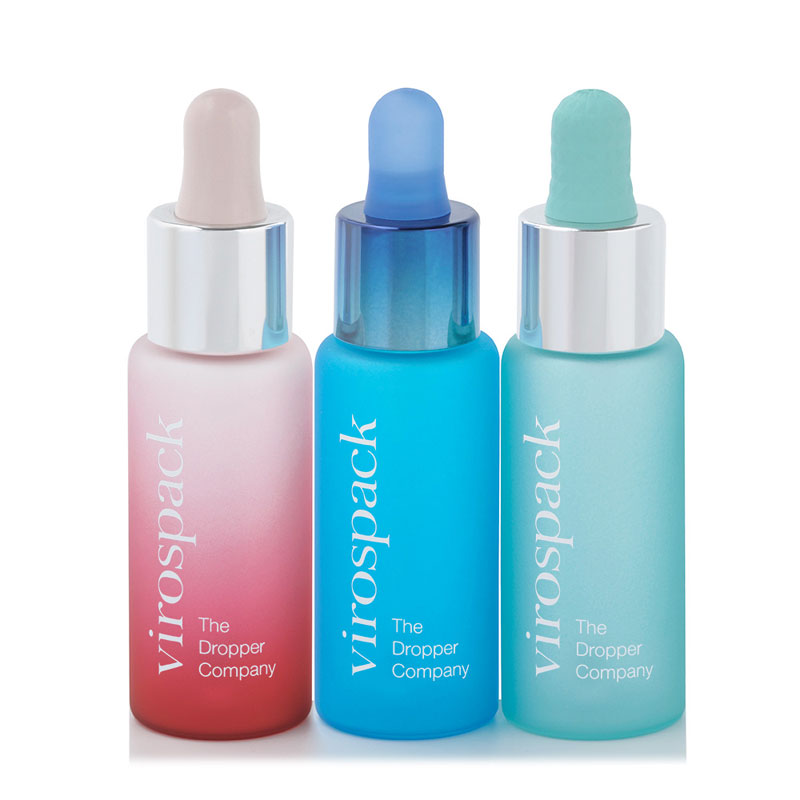
- Aerographic spray for special effects such as gradients, pearlescent finishes and multi-layer coatings on glass and plastic.
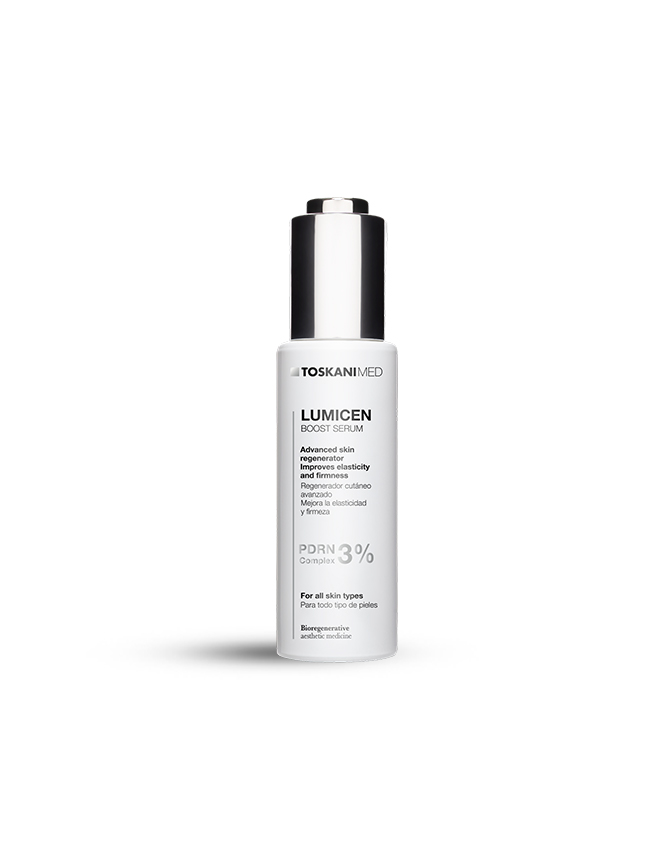
The ToskaniMED Lumicen Boost Serum in our showroom illustrates how decoration can communicate a positioning without excess. Its opaque white bottle, clean typography and contrasting black and silver dropper head create a clinical, dermocosmetic look. The opacity also has a practical benefit: it shields the formula from light while keeping the design minimal. Here, decoration and protection are part of the same decision, which is exactly what a packaging solution should achieve.
Building a range, not just a bottle
Premium brands rarely launch a single product. They launch lines that must look coherent on the shelf while helping the consumer tell each product apart. A good packaging solution plans for this from day one.
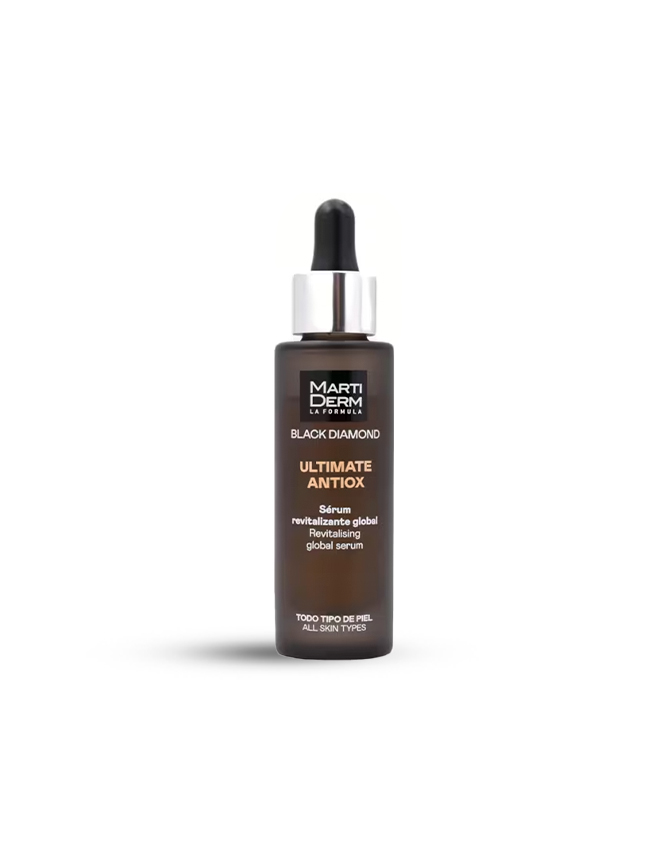
The MartiDerm Black Diamond serums, also part of our showroom, are a clear example. Ultimate Antiox and Absolute Lift share the same bottle shape and the same dropper, with a black bulb and a polished silver collar, so the family is instantly recognizable. Each product is then differentiated through the glass tone, a warm brown for one and a deep grey for the other, and through the color accents on the label. One technical platform, adapted with decoration, gives the brand a consistent line, a simpler supply chain and room to add new references without redesigning the pack.
This “platform” approach is one of the most efficient ways to scale a premium range: the dropper and bottle are validated once, and each new product changes only what the consumer sees.
Sustainability in premium dropper packaging
Sustainability is now part of every packaging brief, including in luxury. Glass is infinitely recyclable and keeps its properties over time, which makes it a solid base for responsible packaging. Beyond the material, the most meaningful improvements come from design and manufacturing choices:
- Lighter glass where weight is not essential to the experience, such as tubular formats.
- Water-based paints in decoration processes.
- Components designed to be easily separated for recycling.
- Durable droppers suited to refill strategies, so the premium bottle can be kept and reused.
Virospack has been awarded the EcoVadis Gold medal, an independent recognition of its environmental and social performance, and continues to develop eco-design options within its dropper and glass ranges.

How a cosmetic packaging project is developed
Whether a brand starts from a catalogue model or a fully custom design, a well-run project usually follows these stages:
- Brief: formula type, viscosity, dose, capacity, target market, positioning and launch date.
- Selection or design: choosing a catalogue bottle and dropper, or developing a custom shape, cap or decoration.
- Sampling: prototypes and decorated samples to validate look, feel and function.
- Compatibility testing: the brand tests the formula with the packaging to confirm stability and correct dispensing.
- Production and decoration: manufacturing of glass, rubber, pipettes and plastic parts, followed by decoration.
- Assembly and inspection: automated assembly and quality control before delivery.
The fewer hand-offs between suppliers, the shorter and safer this process becomes. When glass, bulbs, pipettes, caps and decoration come from the same production site, adjustments made in one component are immediately reflected in the others.
Checklist: how to choose a cosmetic packaging solutions partner
- Do they manufacture the glass bottle and the dropper, or only distribute them?
- Can they adapt the bulb material and the wiper to your formula?
- Which decoration techniques do they apply in-house?
- Can they offer both catalogue models and custom developments?
- How is quality controlled during assembly?
- Do they have proven experience with prestige skincare brands?
- Can they support the full range, from flagship serum to vials and travel sizes?

Why prestige brands work with Virospack
For 70 years, Virospack has specialized in droppers and glass packaging for the beauty industry from its base in Barcelona. Its model is built on vertical integration: rubber is formulated and injected in-house, with capacity for up to 150 million fully customized units; pipettes are produced with laser cutting technology, with more than 130 million units per year; moulded and tubular glass, plastic injection and all decoration processes are carried out in its own facilities. The final stage is a fully automated assembly line with robotics and artificial vision systems that inspect each dropper before it ships.
This control over every component is what allows Virospack to offer complete cosmetic packaging solutions: a dropper and a glass bottle engineered together, decorated to the brand’s identity and delivered ready for filling.
Frequently asked questions
What are cosmetic packaging solutions?
They are the complete packaging systems used to protect, dispense and present a beauty product. In premium skincare, a solution typically includes the glass bottle, the dropper (bulb or push button, pipette, collar and wiper), the decoration and the technical support needed to industrialize the pack.
What is the best packaging for serums?
For most serums, a glass bottle with a dropper is the most effective choice. Glass protects the formula and the dropper delivers a precise dose. Light-sensitive formulas benefit from amber, tinted or opaque-coated glass.
Why do luxury skincare brands use glass bottles?
Glass is inert, offers an excellent barrier against oxygen and moisture, is infinitely recyclable and conveys weight and quality. It can also be decorated with a wide range of premium finishes.
What is the difference between a dropper and a push button dropper?
A classic dropper is filled by squeezing and releasing a rubber bulb, giving the user manual control. A push button dropper loads the pipette with a single press, offering a more repeatable dose and a modern, technical gesture.
What is a wiper in a dropper bottle?
A wiper is an insert placed in the neck of the bottle that removes excess product from the pipette as it is withdrawn. It prevents drips on the neck and label and improves dosing accuracy. It is different from a stopper, which only seals the opening.
What is the difference between moulded and tubular glass?
Moulded glass is formed inside a mold, producing thicker walls, heavier bases and sculptural shapes. Tubular glass is made from glass tubing, resulting in lighter bottles with thin walls and high clarity, ideal for vials and small formats.
Can droppers be used for facial oils?
Yes. Droppers are one of the most common formats for facial oils, provided the bulb material is compatible with oils and the wiper is adjusted to the viscosity of the formula.
Can cosmetic droppers and glass bottles be customized?
Yes. Bottle shape, glass tint, dropper mechanism, cap materials and finishes can all be customized, and decoration such as screen printing, hot stamping, metallization, lacquering and gradient effects can be applied to match the brand identity.