

Glass Vials with Dropper: Ideal Packaging for Boosters, Serums and Active Treatments
Not every cosmetic product is designed to be used in the same way.
Some formulations are intended to become part of a daily routine, applied generously and consistently. Others are developed around a completely different philosophy: highly concentrated ingredients, carefully measured doses and application that prioritizes precision over quantity.
This is where glass vials with dropper have earned their place in modern cosmetic packaging.
Their popularity is not driven by size alone. It comes from the way the format changes the relationship between the user and the formulation. The glass vial suggests concentration before the product is even opened, while the dropper transforms dispensing into a controlled, repeatable action. Together, they create a packaging system where every component contributes to how the product is perceived and ultimately experienced.
For boosters, active serums and intensive skincare treatments, the vial is not simply a container. It is part of the treatment itself.
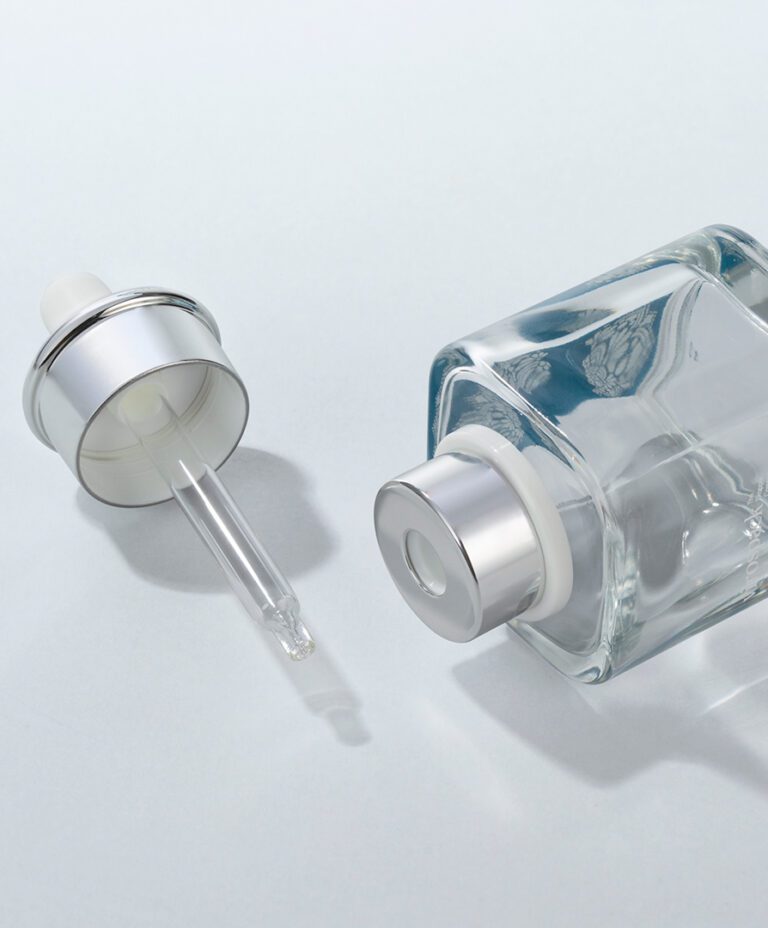
Table of Contents
Why Boosters, Serums and Active Treatments Need a Different Packaging Approach
Not all skincare formulations behave in the same way, and neither should their packaging.
Products such as boosters, serums and active treatments are developed around a common objective: delivering highly concentrated ingredients with precision rather than volume.
Unlike creams or lotions that are typically applied in generous amounts, these formulations are designed to be effective with only a few drops. Their performance depends not only on the ingredients themselves, but also on how consistently they are dispensed and applied.
This changes the role of the packaging.
Instead of simply containing the formula, the packaging becomes responsible for supporting controlled dosing, preserving the integrity of the product and encouraging a more deliberate application routine.
A glass vial with a dropper naturally aligns with these requirements.
Its compact format communicates concentration, while the dispensing system helps transform each application into a measured and repeatable process.
For this reason, the vial is not simply a smaller container. It is a packaging format specifically suited to formulations where precision is part of the product’s performance.

Why Glass Vials Have Become a Signature Format in Premium Skincare
Packaging has evolved alongside cosmetic formulations.
As skincare products have become more sophisticated, brands have moved away from the idea that larger volumes automatically create greater value. Today’s high-performance formulations often deliver visible results using only a few drops, making precision more important than capacity.
Glass vials naturally support this evolution.
Their compact proportions communicate that the product has been formulated to be used with intention rather than abundance. Instead of encouraging consumers to apply more, the format suggests that the formulation has been engineered so that every dose matters.
This subtle shift has a significant impact on perception.
A consumer rarely associates a glass vial with an everyday cosmetic. More often, it is perceived as a treatment, a booster or a concentrated solution designed to solve a specific skincare need. The packaging itself creates expectations about efficacy long before the formulation reaches the skin.
Why the Format Changes the User Experience
A cosmetic package does more than protect its contents.
It also shapes behaviour.
Glass vials encourage a slower and more deliberate interaction than many conventional packaging formats. The consumer opens the product differently, dispenses it more carefully and becomes naturally more aware of the amount being applied.
This changes the rhythm of the skincare routine.
Instead of dispensing product automatically, the user begins to think in doses.
Instead of focusing on millilitres, attention shifts towards drops.
That distinction may seem subtle, but it fundamentally changes how the product is valued. A formulation packaged in a glass vial often feels more concentrated, more technical and ultimately more precious—not because the ingredients have changed, but because the packaging has altered the way the product is experienced.
The construction of the vial also contributes to this perception.
Tubular Glass Vials tend to create a lighter, cleaner and more minimalist interaction. Their uniform geometry and refined proportions reinforce a precise, clinical aesthetic that works particularly well for formulations positioned around science, dermatology and ingredient-led skincare.
Moulded glass vials, by contrast, introduce a greater sense of physical presence. Their thicker walls, sculpted shoulders and heavier bases give the product more weight in the hand, creating a richer and more substantial experience that naturally aligns with luxury skincare collections.
Although both formats can deliver the same formulation with the same level of dispensing precision, they communicate very different product personalities.
One emphasizes purity, precision and technical performance.
The other reinforces craftsmanship, permanence and premium quality.
In premium skincare, these differences are not simply visual.
They influence how consumers perceive the formulation before the first drop is ever applied.
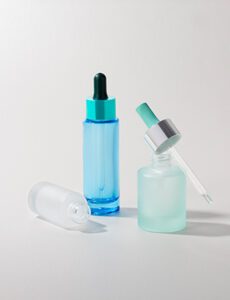
Droppers Catalogue
Discover our full range of droppers catalogue
Why Glass Reinforces Trust in Concentrated Formulations
Glass has remained one of the preferred materials for premium skincare because it supports both the technical and emotional aspects of packaging.
From a formulation perspective, it offers excellent compatibility with a wide range of cosmetic ingredients, making it particularly suitable for products containing botanical extracts, essential oils, antioxidants and other active compounds.
From the consumer’s perspective, glass communicates something equally important: permanence.
Its weight, rigidity and optical clarity create an immediate perception of quality that lighter materials rarely achieve. The product feels stable in the hand, the container feels engineered rather than disposable and the overall experience reinforces confidence in the formulation inside.
For highly concentrated treatments, these qualities become part of the product story. The packaging suggests that the formulation deserves careful handling because it has been designed to deliver precise results.

Precision Begins with the Dispensing System


The value of a glass vial is only fully realized when the dispensing system matches the behaviour of the formulation.
Different products demand different application experiences, and the dispensing mechanism plays a central role in defining them.
A standard dropper remains one of the most versatile solutions for serums and facial oils, allowing users to adapt the dosage according to their individual skincare routine.
A Push button droppers introduces a different philosophy. Rather than relying entirely on manual pressure, it creates a more consistent dispensing cycle, helping deliver a repeatable amount of product from one application to the next. For formulations where dosing consistency reinforces product performance, this additional level of control becomes particularly valuable.
Not every treatment, however, benefits from a dropper.
Roll-on systems are designed for products that require direct application to targeted areas of the skin, eliminating the intermediate step of dispensing drops into the hand. The interaction becomes faster, more localized and highly intuitive.
For luxury collections, magnetic droppers extend the experience beyond dispensing itself. The magnetic closure improves ergonomics while transforming opening and closing into part of the ritual, adding refinement without compromising functionality.
The dispensing system therefore does far more than release the formulation.
It defines how the consumer interacts with it every single day.


FAQs About Glass Vials with Dropper
Why are glass vials with droppers commonly used for concentrated skincare?
Glass vials with droppers are particularly well suited to concentrated formulations because they combine compact packaging with controlled dispensing. This helps users apply small, repeatable doses while reinforcing the perception of precision and efficacy that defines many serums, boosters and active treatments.
Are glass vials suitable for daily skincare products?
Yes, provided the formulation is designed to be applied in small quantities. Glass vials are especially effective for products where dosage accuracy and controlled application are more important than high-volume dispensing.
Which dispensing system works best with a glass vial?
There is no universal solution. Standard droppers offer flexible dosing, push button droppers improve dispensing consistency, roll-on systems support targeted application and magnetic droppers create a more premium interaction. The best choice depends on the formulation and the desired user experience.
What type of glass is commonly used for cosmetic vials?
Both tubular glass and moulded glass are widely used in cosmetic packaging. Tubular glass creates a cleaner, lighter and more uniform appearance, while moulded glass allows more sculpted geometries, thicker bases and a stronger premium presence.
Why do many premium skincare brands choose glass vials?
Glass vials naturally communicate concentration, precision and product quality. Their compact format, combined with controlled dispensing, helps position serums and active treatments as high-performance skincare products rather than everyday cosmetics.
Does the packaging influence how a serum is perceived?
Yes. The packaging affects much more than aesthetics. Elements such as glass construction, bottle proportions and dispensing systems influence how consumers interpret the product, how they apply it and even how concentrated or effective they perceive the formulation to be.