

Amber Bottle: The Best Packaging Choice for Serums, Facial Oils and Active Skincare
An amber bottle is not chosen because it looks premium. It is chosen when the product inside requires protection.
In skincare and cosmetic packaging, certain formulations are inherently unstable. They react to light, air and repeated exposure during use. When this happens, performance degrades over time.
For serums, facial oils and active skincare, this is not a minor issue.
An amber bottle becomes relevant when maintaining the integrity of the formula is part of the product promise.
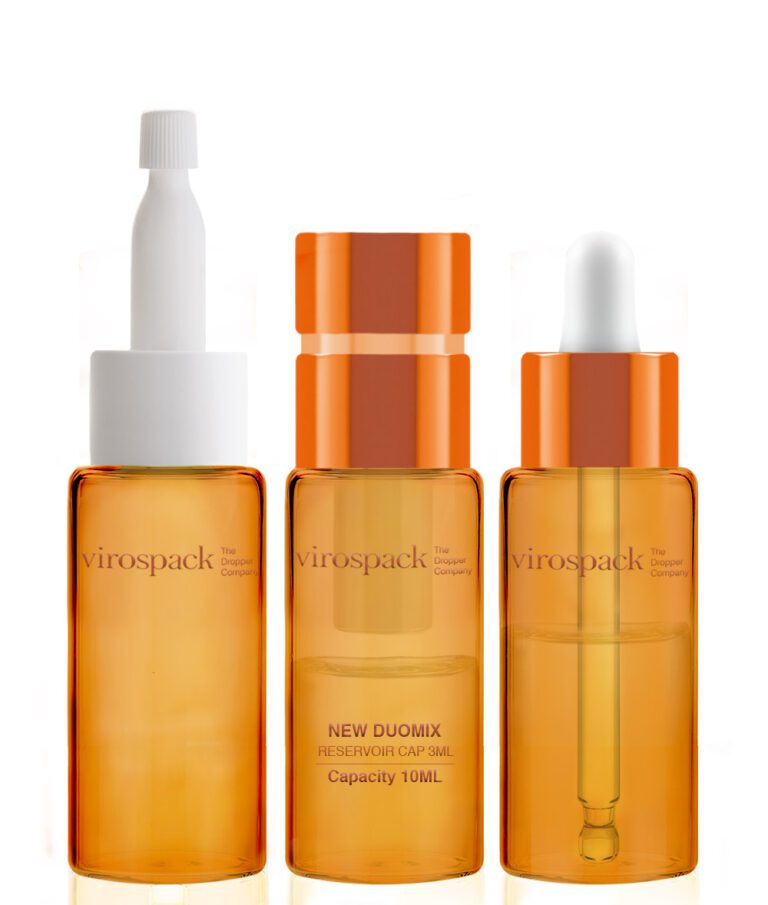
Table of Contents
Why Amber Bottles Are Used in Active Skincare
Active skincare formulations are built around ingredients that are sensitive by nature.
Antioxidants, botanical extracts and lipid-based compounds can deliver visible benefits, but they are also more vulnerable to external stress factors such as light, oxygen and repeated exposure during use.
This is why amber bottles are especially relevant in active skincare.
When exposure is not controlled, active ingredients can oxidize or lose effectiveness gradually. The product may still look acceptable, but its performance can change over time.
This is visible in products like Bobbi Brown Intensive Skin Supplement, where amber glass is not used as a decorative choice, but as part of the formula protection strategy.
For this type of active skincare product, the packaging must help preserve stability from the first application to the last.
Amber bottles reduce light exposure and support consistency across the product lifecycle, making them a strong choice for formulas where efficacy depends on preservation.

Why Serums and Facial Oils Require Amber Bottles
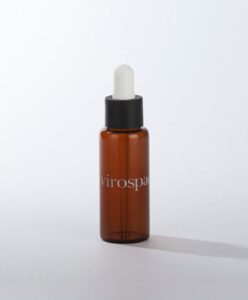
Not all products need this level of protection. But serums and facial oils often do.
These formulations typically:
- contain high concentrations of active ingredients
- rely on delicate molecular structures
- are used over extended periods
Facial oils, in particular, are highly susceptible to oxidation. Exposure to light accelerates this process, altering both texture and effectiveness.
Serums, especially those formulated with active compounds, require consistency in every application.
Amber bottles help preserve that consistency.
Without protection, the product used on day one may not behave the same way weeks later.
Amber Bottles as Part of a Stability Strategy
An amber bottle is not a standalone solution.
It works as part of a broader stability system that includes:
- the formulation itself
- the dispensing method
- the closure mechanism
- the structure of the bottle
Amber glass reduces light exposure, but the full system determines how the product behaves over time.
This includes the type of glass construction used.
Tubular Glass Bottles offer highly controlled internal dimensions and lighter structures. This makes them particularly suitable for precision systems, where consistent dosing and stable flow behaviour are required.
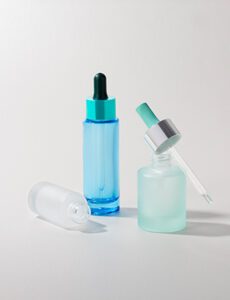
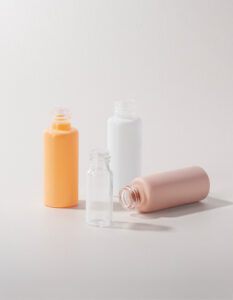
Moulded Glass Bottles, on the other hand, allow thicker walls, heavier bases and more complex geometries. This provides a stronger physical presence and can improve product evacuation, while reinforcing premium perception.
The choice between these structures is not aesthetic.
It affects:
- how the liquid moves inside the bottle
- how the dispensing system performs
- how the product is perceived in hand
At this level, the bottle is not just protecting the formula.
It is shaping how the entire system behaves.
When an Amber Bottle Is the Right Choice

Choosing an amber bottle should be based on the behaviour of the formula, not on visual preference.
It becomes the right choice when:
- the formulation is sensitive to light
- oxidation can affect performance
- consistency across uses is critical
- the product is designed for long-term use
In these cases, not using an amber bottle introduces risk.
For more stable products, the same level of protection may not be necessary.
The decision must always be based on formulation behaviour.
Droppers Catalogue
Discover our full range of droppers catalogue
Amber Bottle vs Clear Bottle: Performance Over Visibility
The difference between an amber bottle and a clear bottle is not only visual. It changes the level of protection the packaging provides.
Clear glass offers maximum transparency. This can be useful when the formula itself is part of the product’s visual appeal: colour, texture, suspended particles or a luxury oil appearance.
But that visibility comes with a limitation.
Clear glass allows more light to reach the formula, which can accelerate degradation in products with sensitive active ingredients.
Amber bottles reduce that exposure. They make the product less visible, but better protected.
This creates a strategic trade-off:
- clear bottles prioritize visibility, product display and visual transparency
- amber bottles prioritize formula protection, stability and performance over time
For active skincare, serums and facial oils, the decision should not be based on which bottle looks better. It should be based on what the formula needs.
If the formula is stable and visually distinctive, clear glass can strengthen the product’s presentation.
If the formula is sensitive to light, amber glass is usually the stronger packaging choice because it protects what the product promises to deliver.


How Amber Bottles Influence Product Perception

Amber bottles communicate something specific.
They suggest that the product inside is sensitive, concentrated or technically formulated. This shifts perception from cosmetic to treatment-oriented.
This can reinforce positioning in:
- active skincare
- dermocosmetics
- high-performance formulations
At the same time, it limits visual transparency.
Brands must accept that they are trading visual exposure for credibility and perceived efficacy.
Why Amber Bottles Are Not Always the Best Choice
Despite their advantages, amber bottles are not universally necessary.
They introduce limitations:
- reduced product visibility
- constraints in design
- strong positioning signals
If the formulation is stable and not affected by light, these limitations may outweigh the benefits.
Using amber bottles without a functional reason can restrict the product without adding real value.
How to Decide if an Amber Bottle Is Right for Your Product
The decision should always start with the formula.
Key questions include:
- Is the formula sensitive to light?
- Does performance degrade over time?
- Will the product be used over an extended period?
- Does packaging need to protect active ingredients?
If the answer is yes, an amber bottle is not an upgrade.
It is part of the product design
FAQs About Amber Bottles in Cosmetic Packaging
What is an amber bottle used for in cosmetics?
It is used to protect light-sensitive formulations and maintain their stability over time.
Are amber bottles necessary for all skincare products?
No. They are only necessary when the formula is sensitive to light or prone to degradation.
Why are amber bottles common in serums and oils?
Because these formulations often contain active ingredients that are vulnerable to light and oxidation.
Do amber bottles improve product performance?
They do not improve the formula itself, but they help preserve its intended performance throughout its use.
Can amber bottles be combined with different dispensing systems?
Yes. Their effectiveness depends on how they are integrated with the dispensing method and overall packaging system.