

Glass Bottle Properties: Essential Characteristics for Cosmetic and Skincare Packaging
Glass is widely associated with premium cosmetic packaging. But its value goes far beyond perception.
In skincare and beauty products, the properties of a glass bottle directly influence how a formula is protected, how it behaves inside the container and how it is experienced during use.
Understanding these glass bottle properties is not about material theory. It is about making correct decisions at product level.
When the glass is well selected, the product remains stable, consistent and aligned with its positioning. When it is not, issues appear in performance, protection and perception.

Table of Contents
Why Glass Bottle Properties Matter in Cosmetic Packaging
In cosmetic packaging, the container is not neutral.
Every material interacts with the formula, with the dispensing system and with the user. Glass stands out because it offers a combination of stability, compatibility and premium perception.
However, not all glass behaves in the same way.
Differences in structure, thickness and geometry affect how the system performs. This is why understanding glass bottle properties is critical when developing cosmetic packaging.
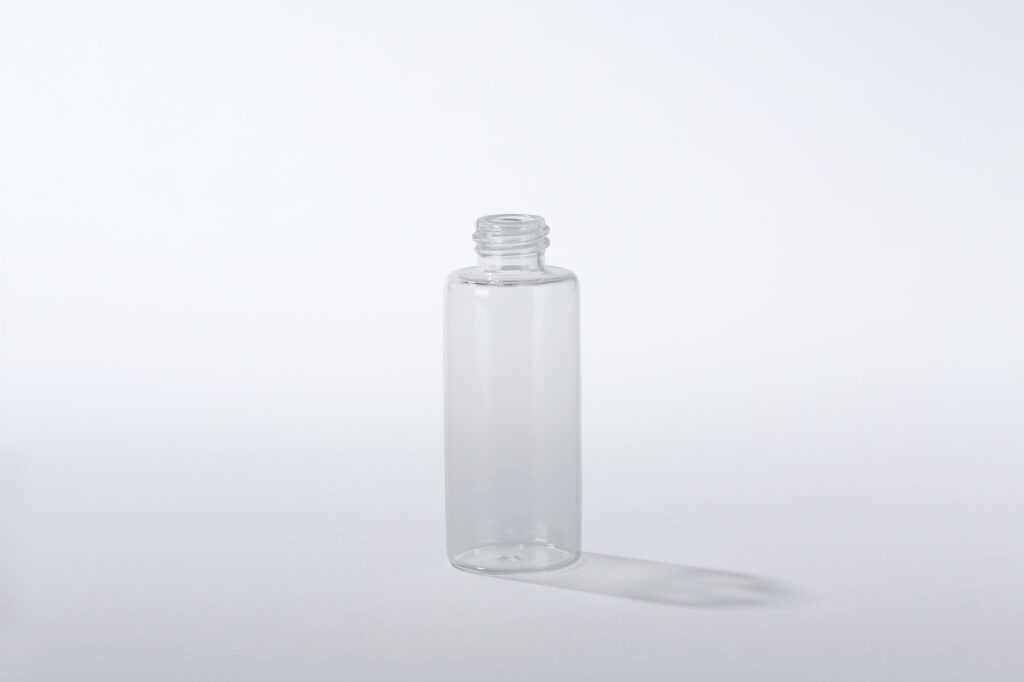
Chemical Inertness and Formula Stability

One of the most important properties of glass is its chemical inertness.
Glass does not react with most cosmetic formulations. This makes it particularly suitable for:
- active serums
- essential oils
- sensitive skincare formulas
This stability ensures that the formula maintains its integrity over time, without contamination or degradation caused by the container.
For products where efficacy is critical, this property is not optional. It is fundamental.
Light Protection and UV Sensitivity
Many cosmetic formulations are sensitive to light exposure.
Active ingredients can degrade when exposed to UV radiation, affecting both performance and shelf life. This is especially critical in products formulated with high concentrations of active compounds.
Glass can be adapted to address this challenge.
Tinted solutions, such as amber glass, reduce light penetration and help preserve the stability of sensitive ingredients. This is not a visual decision. It is a protective mechanism built into the packaging.
This becomes particularly relevant in products like Collistar Attivi Puri Set, where the formulation is designed to deliver targeted actives.
In this type of product, exposure to light can compromise efficacy over time. The use of protective glass ensures that the formula remains stable from first use to last.
Here, packaging is not enhancing the product visually. It is preserving its performance.

Barrier Properties: Protection Against Air and Contamination

Glass provides an effective barrier against external contamination.
Unlike more permeable materials, it prevents interaction between the formula and the environment.
However, protection is not defined by the bottle alone.
It depends on the complete system:
- bottle
- closure
- dispensing mechanism
For example, dropper-based systems allow controlled air exchange, while other formats can minimize exposure almost completely.
This means that barrier performance is not only a property of glass, but of how the entire packaging system is engineered.
Droppers Catalogue
Discover our full range of droppers catalogue
Mechanical Strength and Durability
Glass must perform under real conditions, not only in controlled environments.
There are two main structural approaches:
- Tubular Glass, which offers lighter weight and high dimensional consistency.
- Moulded Glass, which allows thicker walls and more complex shapes.
Tubular glass provides excellent uniformity, which is beneficial for precision systems. Moulded glass, on the other hand, offers higher perceived robustness and structural presence.
According to the catalogue, moulded bottles can also incorporate features such as optimized internal designs to improve product evacuation (“last drop”).
Choosing between these options is not aesthetic. It depends on how the product will be used and positioned.

Internal Geometry and Its Impact on Product Behavior

One of the most underestimated glass bottle properties is internal geometry.
The shape inside the bottle affects:
- how air moves
- how liquid flows
- how consistently the product is dispensed
This becomes especially critical in dropper-based systems.
Even small variations in internal dimensions can influence how the pipette fills, how the liquid stabilizes and how the drop is formed and released.
In this context, the bottle is not just a container. It becomes part of the dispensing system itself.
Weight, Thickness and Perceived Quality
Weight plays a critical role in how a cosmetic product is perceived.
Glass packaging is not only evaluated visually. It is judged through touch. The moment a user holds the product, weight and balance immediately communicate quality.
Thicker glass walls and reinforced bases create a sense of solidity and durability. This tactile feedback is often associated with higher value, precision and formulation integrity.
This is particularly evident in products like Josie Maran Argan Reserve, where the packaging is designed to convey richness and concentration through its physical presence.
In this type of product, weight is not incidental. It reinforces the perception that the formula is dense, potent and carefully formulated.
At this level, perceived quality is not built through design alone. It is built through how the packaging feels in the user’s hand.
Well-controlled thickness and weight distribution turn the bottle into part of the product experience.

Compatibility with Dispensing Systems
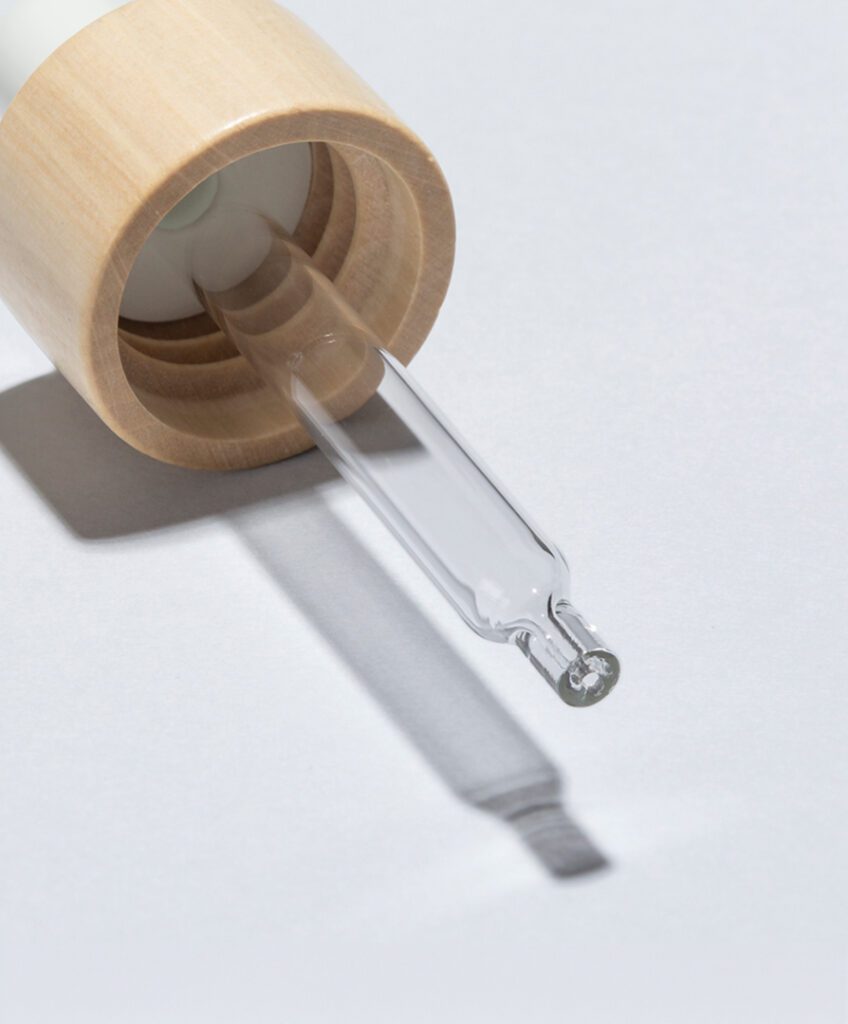
Glass must work in coordination with the dispensing system.
This includes:
- precise neck finishes
- accurate sealing surfaces
- correct alignment between bottle and closure
These elements ensure that droppers, pipettes and other dispensing systems function consistently.
If this alignment is not correct, issues such as leakage, unstable dosing or air intake inconsistencies can appear.
At this level, compatibility is not optional. It is critical for system performance.
Customization and Decoration Capabilities
Glass allows a wide range of customization options.
These include:
- lacquering
- screen printing
- hot stamping
- metallization
These techniques make it possible to align packaging with brand identity while maintaining the integrity of the material.
However, decoration must be applied carefully.
If not properly executed, it can affect durability, adhesion or even the perception of quality. The balance between design and performance is essential.
How to Choose the Right Glass Bottle for Your Product
Choosing the right glass bottle requires aligning multiple variables.
The most important factors include:
- formula sensitivity (light, air, stability)
- viscosity and dispensing requirements
- desired positioning (premium, technical, functional)
- compatibility with dispensing systems
There is no universal solution.
Each product requires a specific combination of glass properties to ensure that packaging supports performance, not just presentation.

FAQs About Glass Bottle Properties
Why is glass considered the best material for cosmetic packaging?
Because it is chemically inert, stable and compatible with sensitive formulations, especially in skincare.
Does glass protect formulas from light?
It can. Tinted glass reduces light exposure and helps preserve the stability of light-sensitive ingredients.
How does glass affect product dispensing?
Internal geometry influences how liquid moves and how consistently it is dispensed, especially in precision systems such as droppers.
Can glass bottles be customized without affecting performance?
Yes, but decoration must be applied correctly to ensure it does not interfere with durability or system integrity.
What factors matter most when choosing a glass bottle?
Formula behaviour, dispensing requirements, protection needs and positioning are the key elements to consider.