

Packaging Design and Manufacturing: How Virospack Creates Premium Cosmetic Packaging
In premium cosmetics, packaging is not a secondary element. It is a structural component of the product itself. The way a formula is protected, dispensed and perceived depends directly on how packaging is designed and manufactured.
For this reason, packaging design and manufacturing cannot be treated as separate processes. When design decisions are disconnected from industrial reality, the result is often inconsistency, delays or compromised quality. Conversely, when both are fully integrated, packaging becomes a controlled system where aesthetics, functionality and production efficiency converge.
This is where companies like Virospack operate differently. By combining in-house design, glass manufacturing, component production and decoration technologies, they approach packaging as a unified industrial discipline rather than a sequence of fragmented steps.
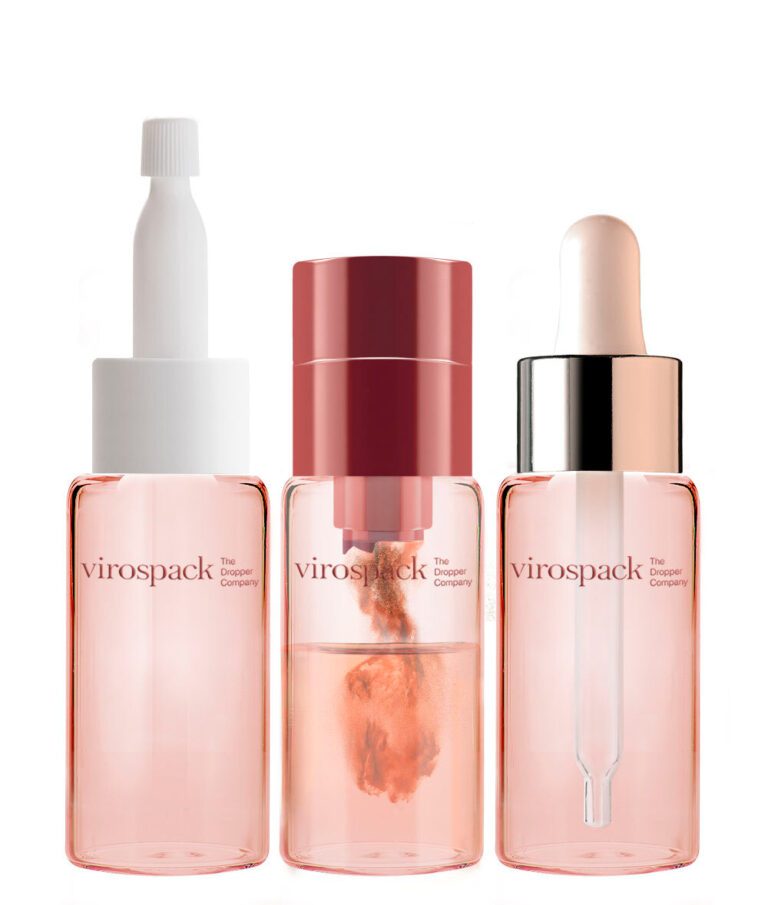
Table of Contents
What Packaging Design and Manufacturing Really Means in the Cosmetic Industry
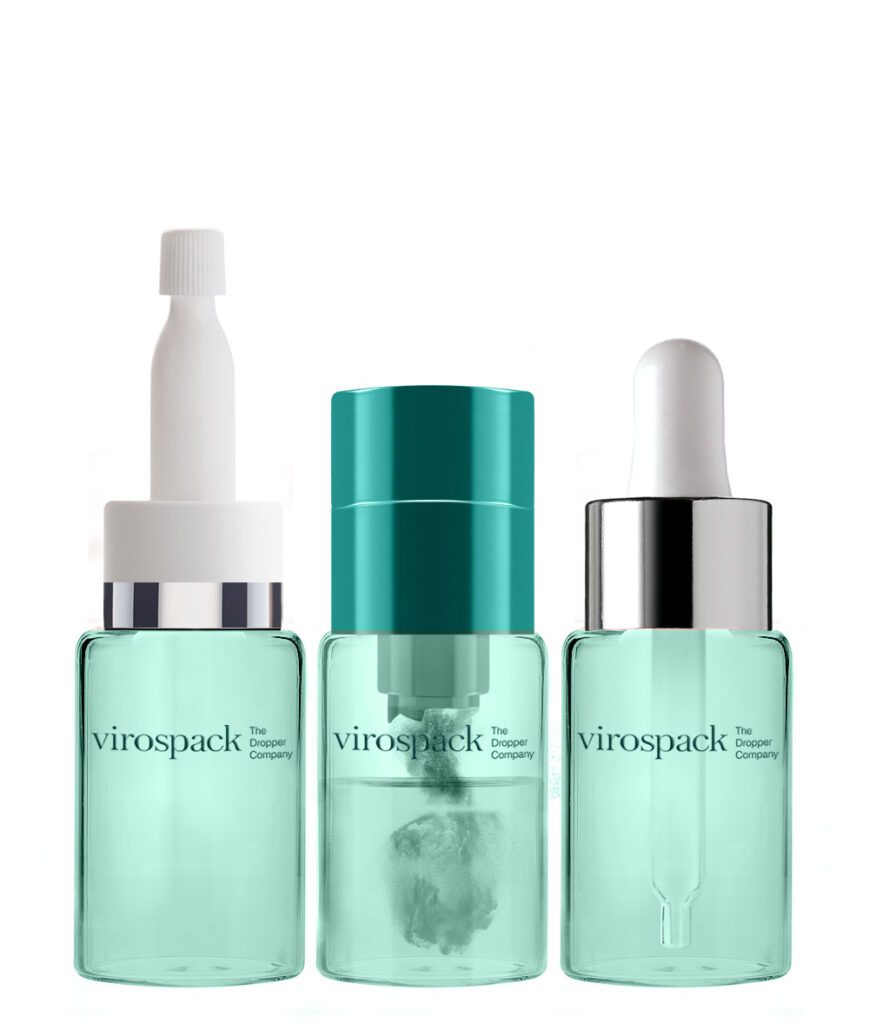
In technical terms, packaging design and manufacturing refers to the complete lifecycle of a packaging system, from concept development to industrial production and final assembly.
In cosmetics, this lifecycle involves multiple layers of complexity:
- The packaging must preserve sensitive formulas
- It must deliver controlled and repeatable dosing
- It must align visually with brand positioning
- It must be manufacturable at scale without deviation
The critical point is that none of these variables can be optimized in isolation. A bottle design that looks visually appealing may fail if it cannot be produced with consistent wall thickness. A dispensing system may be precise, but incompatible with the bottle geometry.
For this reason, leading manufacturers treat packaging as an integrated system, where design decisions are validated against manufacturing constraints from the earliest stages.
The Role of Design in Premium Cosmetic Packaging
Design in cosmetic packaging goes beyond aesthetics. It defines how the product is perceived, handled and used. In premium segments, design is expected to communicate quality before the product is even tested.
Shape, Proportion and Visual Identity
The geometry of a bottle is one of the most immediate signals of brand identity. Subtle variations in proportions—diameter, height, base thickness—can significantly alter how a product is perceived.
In high-end packaging, symmetry and balance are not accidental. They are the result of controlled design processes aligned with manufacturing capabilities. For example, tubular glass structures enable highly precise cylindrical forms, while moulded glass allows more sculptural shapes with heavier bases.
The key is not choosing one approach over the other, but selecting the architecture that aligns with the brand’s positioning and the product’s functional requirements.
Design as a Brand Positioning Tool
In premium cosmetics, packaging communicates positioning instantly.
- Transparent glass with minimal decoration suggests purity and clinical precision
- Frosted finishes and metallic accents convey luxury
- Bold colours and complex geometries signal differentiation
These choices are not purely visual. They are enabled—or limited—by manufacturing processes. The role of the manufacturer is therefore not just to produce packaging, but to translate brand identity into industrial reality.
User Experience and Functional Design
Packaging must function as an extension of the product. The way a dropper fills, the resistance of a push button, or the smoothness of a roll-on applicator all influence the user experience.
These elements are not designed in isolation. They depend on:
- Internal tolerances of the bottle neck
- Compatibility between components
- Material behaviour under repeated use
This is why packaging design and manufacturing must be connected. Functional design can only be validated when manufacturing precision is taken into account.

Manufacturing Excellence: From Concept to Industrial Production
Once a design is defined, the challenge shifts to manufacturing it consistently at scale. This is where many packaging projects fail: what works as a prototype does not always translate into stable production.
Glass Manufacturing Technologies: Tubular and Moulded
Two primary technologies define glass cosmetic packaging:
Tubular Glass offers:
- High dimensional precision
- Uniform wall thickness
- Clean and consistent geometry
Moulded glass allows:
- Custom shapes
- Heavier bases
- Stronger visual presence
Each technology requires different production processes and quality controls. Selecting the right one is not just a design decision—it is a manufacturing strategy


Component Production and Assembly
Cosmetic packaging rarely consists of a single element. It is a system composed of:
- Glass bottles
- Droppers or pumps
- Caps and collars
- Internal components such as pipettes
Each component must be manufactured within precise tolerances to ensure proper fit and function. Misalignment at any point can lead to leakage, dosing inconsistencies or mechanical failure.
This is why advanced manufacturers integrate component production within their industrial ecosystem.
Quality Control and Industrial Precision
Precision in packaging manufacturing is measured in fractions of a millimetre. Neck finishes, thread dimensions and sealing surfaces must align perfectly across thousands or millions of units.
Maintaining this level of consistency requires:
- Controlled production environments
- Continuous quality monitoring
- Standardized industrial processes
Without these controls, even well-designed packaging can fail in real-world use.
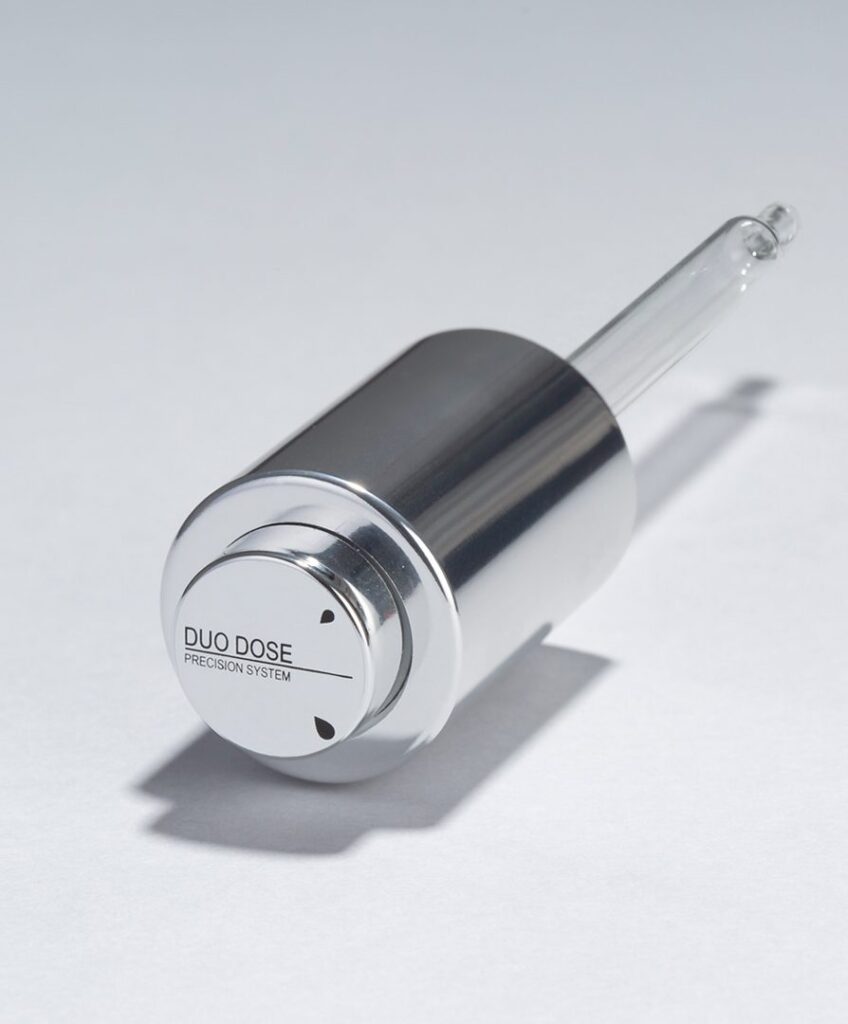
How Virospack Integrates Design and Manufacturing
One of the key differentiators in packaging design and manufacturing is the level of integration between design and production.
Virospack operates under a vertically integrated model, where multiple stages of the packaging process are managed in-house. This approach allows design decisions to be continuously validated against manufacturing constraints.
In-House Design and Engineering
Design and engineering teams work together from the earliest stages of development. Concepts are not only evaluated visually, but also technically, ensuring that they can be produced with the required precision.
Integrated Production Capabilities
Glass manufacturing, component production and decoration processes are coordinated within the same industrial framework. This reduces variability and improves control over the final product.
From Prototype to Mass Production
A critical advantage of integration is the ability to transition from prototype to industrial production without redefining the packaging system. This reduces development time and minimizes risk.
Why Packaging Design Only Works When Manufacturing Is Part of the Decision
The moment packaging design is treated as a visual exercise, the project is already compromised.
In cosmetics, especially in premium segments, packaging is not an outer layer. It is part of how the product behaves. The way a formula is dispensed, the consistency of each application, even the perception of quality, all depend on decisions that are often taken much earlier than production — at the design stage.
The problem is that most of those decisions are made without fully understanding how they will behave under manufacturing conditions.
A bottle can look perfectly proportioned on screen and still create instability once it enters production. A dropper can feel precise during sampling and become inconsistent after a few weeks in real use. A decoration can look flawless in a prototype and shift in tone or adhesion when applied at industrial scale.
These are not execution errors. They are design decisions that were never validated against the reality of manufacturing.
Droppers Catalogue
Discover our full range of droppers catalogue
The Point Where Everything Is Defined: The Interface Between Components
What actually defines whether packaging works is not the bottle itself, but the relationship between its components.
The interface between glass, pipette and closure is where the system either performs or fails.
This is where very small variations start to matter.
If the internal diameter of the neck changes slightly from one batch to another, the pipette will not behave the same way. If the air return inside the system is not controlled, the drop will not form consistently. If the sealing pressure varies, the product may remain stable in testing but fail during transport or daily use.
None of this is visible in a rendering. None of this is solved at the end of the process.
It is defined when design and manufacturing are aligned — or not.
What Changes When You Work With Real Precision Systems
This becomes very clear in formats where the packaging is directly responsible for dosing.
Perfume oils are a good example because they remove the “buffer” that spray systems provide. There is no atomizer correcting inconsistencies. The packaging is the system.
The format used in NEST New York Perfume Oils makes this very evident. The product is applied directly to the skin, and the user expects each application to feel identical.
What seems like a simple gesture — placing a drop on the skin — is actually the result of several controlled variables working together.
The volume that the pipette draws must remain stable. The drop must detach at the right moment, without dragging or splitting. The system must remain sealed even when the product is carried, tilted or exposed to temperature changes.
If any of these elements are slightly off, the user notices immediately. Not as a technical issue, but as a loss of quality.
hat is the difference between packaging that looks premium and packaging that behaves as premium.

Why Most Manufacturers Cannot Control This Level of Detail
The reason is structural, not technical.
In many cases, packaging is developed through multiple suppliers, each responsible for a different part of the system. One produces the glass, another the pipette, another applies decoration. Each works correctly within its own process, but no one controls the behaviour of the system as a whole.
This is where variability enters.
The bottle is within tolerance. The pipette is within tolerance. The closure is within tolerance. But once assembled, the system behaves differently from unit to unit.
Not because something is “wrong”, but because no one designed the system as a single functional unit.
How Virospack Approaches Packaging as a System, Not as Components
The difference in approach comes from treating packaging as something that has to perform, not just exist.
Virospack works under an integrated model where glass, components and decoration are developed within the same industrial logic. This does not just simplify production. It changes how decisions are made.
A bottle is not approved because it looks right. It is approved because it can be produced with stable internal geometry. A pipette is not selected because it fits. It is calibrated to work with the specific bottle architecture. A decoration is not applied at the end. It is considered from the beginning because it affects dimensions and assembly.
This way of working removes the gap between concept and production.
FAQs About Packaging Design and Manufacturing
What is packaging design and manufacturing in cosmetics?
It refers to the complete process of designing, engineering and producing packaging systems that protect, dispense and represent cosmetic products.
Why is integration important in packaging development?
Integration ensures that design decisions are aligned with manufacturing capabilities, reducing errors and improving consistency.
How long does packaging development take?
It depends on complexity, but integrated manufacturers can significantly reduce development time by controlling multiple stages of production.
Can cosmetic packaging be fully customized?
Yes. Customization can include bottle shape, components, decoration and finishing techniques.
What materials are used in cosmetic packaging?
Glass is widely used for premium products due to its stability and aesthetic qualities, often combined with plastic or metal components for dispensing systems.