Glass Cosmetic Packaging: Bottles and Droppers for Premium Beauty Brands
Glass cosmetic packaging is any container made of glass and used to hold, protect and present a beauty product: bottles, vials, jars and roll-on vials. For premium liquid formulas such as serums, facial oils and concentrates, the reference format is a glass bottle closed with a dropper, because glass protects the formula, does not interact with it and conveys quality, while the dropper delivers a precise dose.
This guide focuses on that combination: the types of glass bottles, colors and finishes, how to pair them with the right dropper, how to build a range, and the honest pros and cons of glass compared with other materials.
Key takeaways
- Glass is inert, offers an excellent barrier against oxygen and moisture, and can be recycled again and again.
- Glass bottles are made in two ways: moulded glass (heavier, sculptural) and tubular glass (lighter, very clear, ideal for small formats).
- Glass color is a functional choice: amber and dark tints protect light-sensitive actives, clear glass shows the formula.
- The dropper and the bottle must be specified together: same neck finish, a pipette adapted to the bottle height and materials compatible with the formula.
- Glass has real drawbacks, mainly weight and fragility, which good design and the right format can reduce.
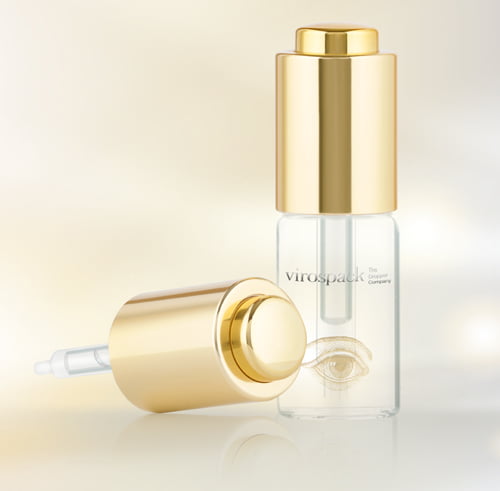
Table of Contents
What does glass cosmetic packaging include?

Format | Typical products | Usual closure |
Glass bottles | Serums, facial oils, essences, concentrates | Dropper, push button dropper, cap |
Glass vials | Ampoules, boosters, samples, travel sizes | Dropper or cap |
Roll-on vials | Perfume oils, eye care, targeted treatments | Roll-on ball and cap |
Glass jars | Creams, balms, masks | Screw cap, often with a spatula |
Jars follow their own design rules, covered in our guide to luxury glass cosmetic jars. Here we focus on bottles and vials closed with droppers, the dominant format for premium liquid skincare.
Why premium beauty brands choose glass
- It does not interact with the formula: glass is chemically inert, so active ingredients, essential oils and fragrances keep their properties.
- It protects: glass is an excellent barrier against oxygen and moisture, and tinted glass also filters light.
- It conveys value: weight, transparency and a cool, smooth touch are immediate signals of quality.
- It can be decorated in many ways: printing, hot stamping, metallization, lacquering and special effects can be applied directly to the glass.
- It is recyclable and durable: glass can be recycled repeatedly without losing its properties, and a durable bottle can be kept and refilled.

What does glass cosmetic packaging include?
Glass is not perfect, and a good packaging decision takes its limits into account:
Disadvantage | How to reduce it |
Weight, which increases transport impact | Use tubular glass or lighter designs where weight is not essential to the experience |
Fragility | Choose robust shapes, adequate wall thickness and protective secondary packaging |
Higher cost than some alternatives | Use standard catalogue shapes and invest in decoration rather than custom molds |
Thick walls can make a small fill look bigger | Communicate capacity clearly and choose proportions that respect the consumer |
Moulded glass vs. tubular glass bottles
Glass bottles for cosmetics are produced with two different technologies, and Virospack manufactures both in its own facilities:
Moulded glass | Tubular glass | |
How it is made | Molten glass is formed inside a mold | Bottles are formed from precision glass tubing |
Look and feel | Thicker walls, heavy base, sculptural shapes | Thin, light walls with high clarity |
Typical capacities | 15, 30 and 50 mL in Virospack’s range | From 2 to 30 mL in Virospack’s standard range |
Best for | Flagship serums and facial oils | Vials, ampoules, boosters, samples and travel sizes |
Moulded glass bottles are the natural choice when the pack must express premium positioning. The African Botanics Pure Marula Oil, featured in our showroom, shows why: a clear glass bottle with a thick, heavy base lets the golden oil fill the pack with light, while the weight of the glass tells the consumer this is a precious product before it is even opened. Virospack’s moulded range comes in Wide and Slim designs, and the Wide version includes a last-drop system so the formula can be used to the very end.
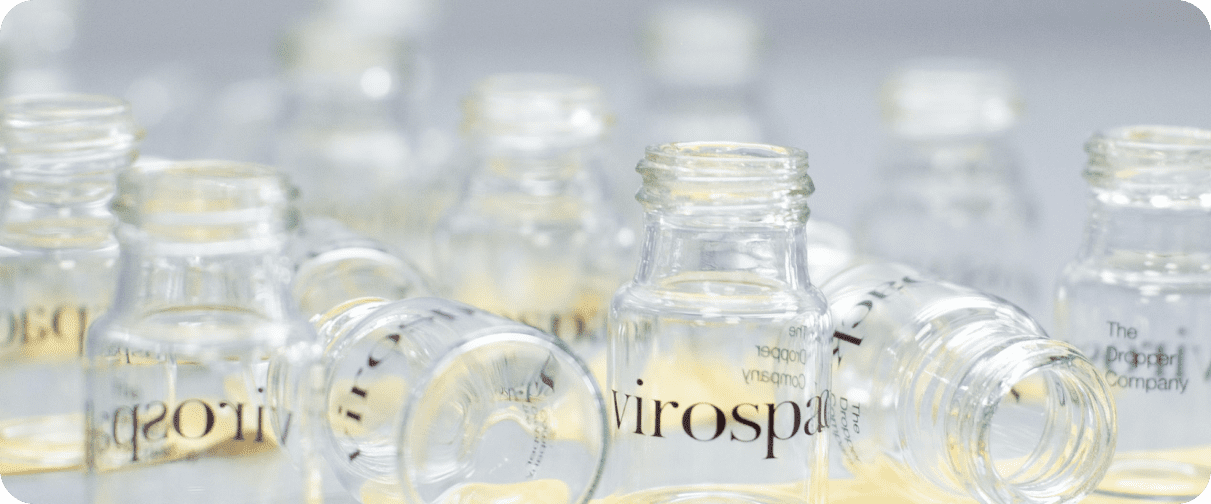
Tubular glass, made from neutral hydrolytic glass in clear or amber, offers an excellent strength-to-weight ratio and dimensional precision. It is the best option for small, precise formats and for lowering the weight of the pack.

Droppers Catalogue
Discover our full range of droppers catalogue

Glass colors and finishes: function and identity
Option | Main benefit | Best for |
Clear glass | Shows the color and texture of the formula | Facial oils, stable serums |
Amber glass | Filters light | Light-sensitive actives, botanical formulas |
Dark or tinted glass | Protection and a strong visual identity | Vitamin C, retinoids, treatments |
Opaque lacquered glass | Full light protection and a solid color | Clinical or very graphic brands |
Frosted or matte finish | Soft touch and a diffused, calm look | Hydrating and natural positioning |
Gradients and pearlescent effects | Movement and differentiation | Hero products and limited editions |
The DermaDoctor Kakadu C serum in our showroom shows color working as protection. This vitamin C serum is packaged in dark glass with a black dropper: the dark glass helps shield an ingredient known for its sensitivity to light, while the purple label stands out clearly against the bottle.
Completing the bottle: choosing the right dropper
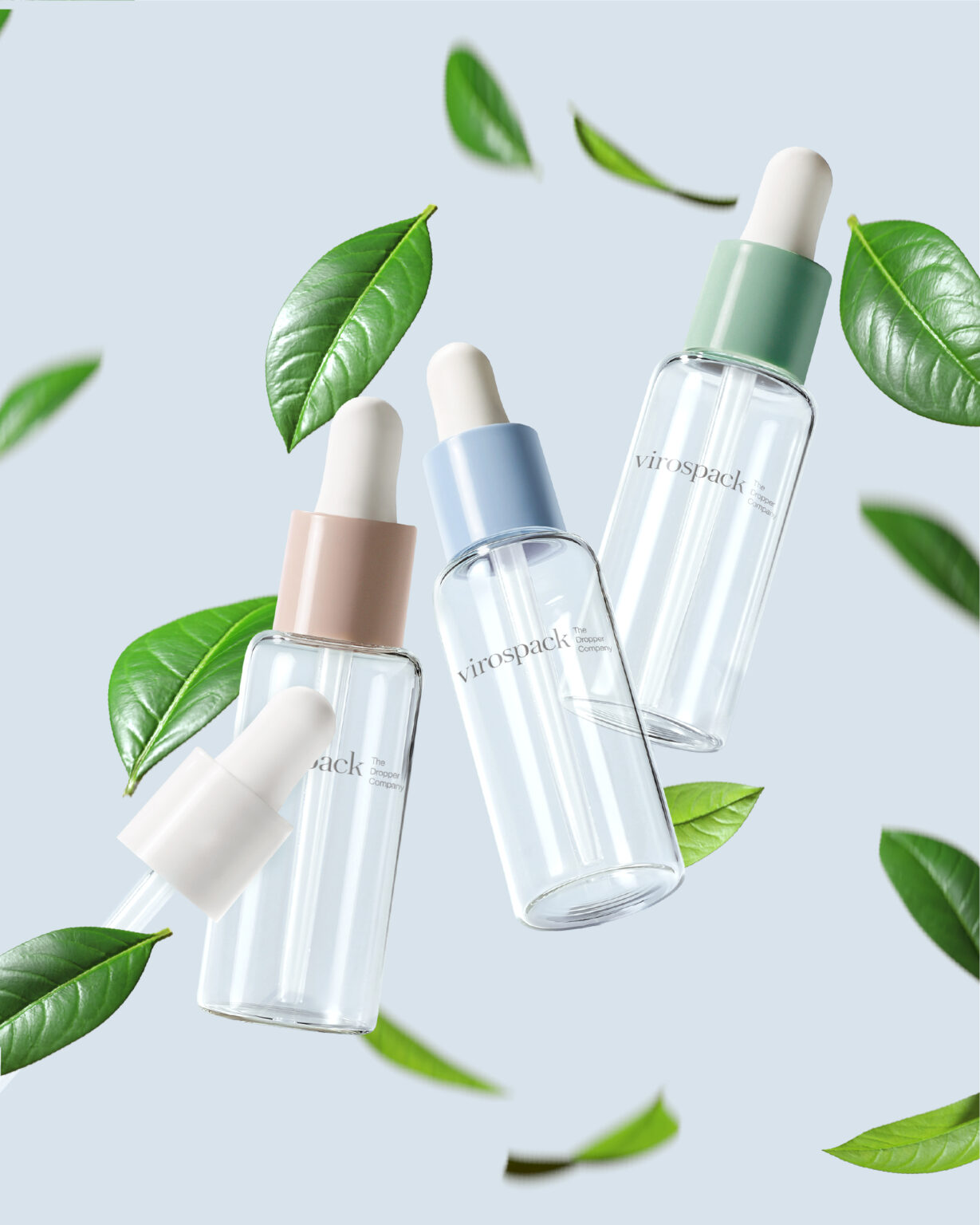
A glass bottle is only half of the pack. The dropper delivers the dose, closes the bottle and is the part the consumer touches every day. Virospack’s range of droppers includes classic bulb, push button and magnetic models, and the right choice depends on four points:
- Neck finish: the dropper and the bottle must share the same diameter and thread finish, for example 18/415.
- Pipette length: it must reach close to the bottom of the bottle so the formula can be used to the end.
- Bulb material: rubber compounds and TPE react differently to oils and actives, so compatibility must be tested with the real formula.
- Wiper: the insert in the bottle neck that removes excess product from the pipette, preventing drips on the neck and label.
Building a range in glass
Most premium brands need more than one format: a full-size bottle, a concentrated booster, a travel size or a discovery set. Glass makes it possible to combine formats while keeping a consistent identity.
The Isispharma Geneskin range in our showroom is a clear example. White opaque glass bottles with black droppers carry the main serums, while a small gold vial with a gold-collared dropper presents a complementary treatment. Different formats, colors and capacities coexist, yet the shared typography and dropper style make them read as one family.
Decorating glass cosmetic packaging
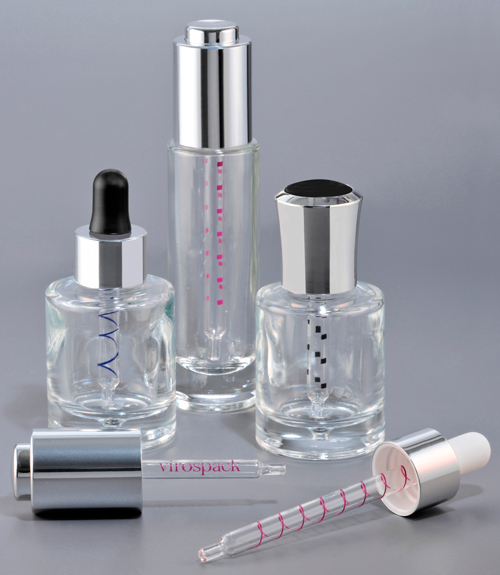
Decoration turns a standard glass bottle into a brand asset. Virospack applies all decoration processes in-house:
- Screen printing in one, two or three colors, with organic or UV inks.
- Hot stamping for metallic logos and details.
- Metallization and sputtering for mirror-like finishes on collars and caps.
- Electrostatic lacquering with water-based paints, in opaque or translucent colors with gloss or matte finishes.
- Aerographic spray for gradients, pearlescent effects and multi-layer finishes.
Is glass cosmetic packaging sustainable?
Glass is one of the most sustainable materials for premium beauty: it is recyclable without loss of quality, durable enough to be refilled and inert, so it does not need additional barrier layers. Its main environmental cost is weight, which can be reduced with tubular glass and well-proportioned designs. Choosing water-based decoration, lower-impact dropper components and bottles designed to be kept completes a responsible glass pack.
How to choose glass cosmetic packaging: a checklist
- Formula: viscosity, sensitivity to light and air, dose per use.
- Format: bottle, vial, roll-on or jar.
- Glass type: moulded for presence and weight, tubular for lightness and small capacities.
- Color and finish: protection needs first, then brand identity.
- Capacity: based on dose, duration of use and price positioning.
- Closure: dropper type, neck finish, pipette length and bulb material.
- Decoration: techniques that express the brand and can be reproduced consistently.
- Testing: compatibility and dispensing tests with the real formula before production.
Why beauty brands choose Virospack for glass packaging
Virospack has spent decades specializing in glass packaging and droppers for the beauty industry. It manufactures both moulded and tubular glass, rubber bulbs, pipettes and plastic components, and carries out all decoration in its own facilities. That makes it possible to design the bottle and the dropper as a single system, decorated to each brand’s identity and ready for filling.
Frequently asked questions
What is glass cosmetic packaging?
It is packaging made of glass for beauty products, including bottles, vials, roll-on vials and jars. For premium serums and oils, the most common format is a glass bottle with a dropper.
Is glass better than plastic for cosmetics?
For premium liquid skincare, glass is generally the preferred choice because it is inert, offers an excellent barrier and conveys quality. Its main drawbacks are weight and fragility.
What are the disadvantages of glass packaging?
Glass is heavier and more fragile than some alternatives, and it can cost more. Lighter tubular formats, robust shapes and protective secondary packaging reduce these drawbacks.
What is the difference between moulded and tubular glass?
Moulded glass is formed inside a mold and gives heavier bottles with sculptural shapes. Tubular glass is made from glass tubing and gives lighter, very clear bottles, ideal for small formats.
What color glass is best for skincare?
Amber, dark and tinted glass protect light-sensitive formulas such as vitamin C. Clear glass is ideal for stable formulas and oils whose color is part of the product’s appeal.
Is glass cosmetic packaging recyclable?
Yes. Glass can be recycled repeatedly without losing its properties. Droppers and caps should be separated from the bottle before recycling.
Can glass cosmetic bottles be customized?
Yes. Shape, color, finish and decoration can all be customized, from screen printing and hot stamping to lacquering, metallization and gradient effects.